
Showing posts with label federal budget. Show all posts
Showing posts with label federal budget. Show all posts
Aug 23, 2014
From Ferguson to Real Change
There has been a deluge of reporting and commentary on the killing of an unarmed black teen in the Ferguson suburb of St Louis, and on the protests that followed. Yet the way forward has been clouded by inadequate attention to at least four important issues:
1. Militarization of Police – A growing problem, visible to activists for years, has finally broken through to the media and the public. Police have been purchasing (and receiving free from a major Pentagon program) large quantities of military style weapons. It’s gear that looks more like a Transformers movie than legitimate police equipment. It ranges from body armor and armored personnel carriers, to sniper rifles and 2nd generation tear gas. (What Military Gear Your Police Department Bought)
Such gear separates police from protesters, undercuts legitimate “protect and serve” orientation and programs, and often makes confrontations more lethal. It also equips, emboldens, and legitimizes the Rambo-style officers in most police depts. Most people are shocked to learn that “roughly 137 times a day, a SWAT team assaults a home and plunges its inhabitants and the surrounding community into terror.” (One Nation Under SWAT.)
2. Racism – Like minority communities in scores of other cities, Ferguson protests build on the frustration of people of color who have faced decades of poor education, lack of jobs and resources, and discriminatory policies that have been the root of unrest since the 1960's. (See an activist’s view of Unresolved Race and Economic Issues, or the views of this pastor or another activist.)
One example: Blacks are pulled over by police in far greater numbers and received larger tickets than whites, and are a key reason why US incarceration rates are the highest in the world. (See the middle section of In Ferguson or Exposing the Toolbox of Racist Repression.)
3. Budget Priorities – The huge expense of race- and class-skewed policies cited above siphon money from sorely needed programs that would address underlying problems of prejudice and inequality. The list is familiar and includes greatly expanded jobs, social service, and community-building programs.
Funding for such programs must come from reducing military spending – which like all too many police and urban spending efforts emphasizes violent, 11th hour interventions that are ultimately ineffective, instead of major (but ultimately cheaper) programs to address underlying causes…. Moreover, those problems are at the heart of the ability of radical groups to find recruits. (See From Gaza to Ferguson or Ferguson, Gaza and Luhansk, or 90-Year-Old Holocaust Survivor Arrested in St. Louis. For clear data on spending, see tables 2 or 7 or use the full LPF Budget Priorities computer-based activity.)
4. The Essential Contribution of Nonviolence – Ferguson also exposes the still rampant illusion that nonviolent responses to conflict are nice but don’t ultimately work: “Real” problems require “real” (violent) responses. But as Desmond Tutu put it, nonviolence is “a force more powerful” than military – or militarized police – responses to conflict, as history repeatedly shows in both arenas. (See LPF Nonviolence resources from a Shalom discussion essay to an AV-rich Nonviolence Forum.)
But Ferguson also reveals inadequacies of efforts to organize and deploy nonviolence campaigns. Activist groups have been too complacent and isolated from younger generations who lack experience with the power of nonviolent responses to conflict. Ferguson must be a wake-up call to activist groups as well as police forces, urban planners, state and federal budget officials. (See In Ferguson, young demonstrators are finding it’s not their grandparents’ protest and Nonviolent Protest and Accountability in Ferguson. All this points to the importance of efforts like Campaign Nonviolence - LPF is a member - which is highlighting over 125 nonviolent actions around the US in the week following Sept. 21, the ”International Day of Prayer for Peace” – see our next blog post. And consider participating! )


Dec 16, 2013
Congressional budget compromise . . .

Indeed, There is a lot to celebrate about Congress negotiating its way out of yet another painful budget standoff. But the details are pretty sobering as well. Here’s a brief summary of the budget deal:
The plus side: It doesn't cut Social Security, Medicare, Medi- caid, etc. And it backs away from over two years of destructive actions: Fiscal cliff, debt limit, sequester, government shutdown... all very damaging to many programs -- and with the threat of default, they put both the U.S. and the global economy at risk.
On the negative side: The budget deal does nothing to reduce defense spending (or call for even the most obvious tax increases; or close tax loopholes). We are thus denied the resources needed to address the nation’s #1 priority: putting people back to work, esp. to help us take serious steps toward forstalling climate change, to expand renewable energy, to build infrastructure, to enhance rather than cut the safety net even further…
Yet the budget deal allows unemployment benefits to expire for 1.3 million long-term unemployed workers. It leaves the sequester cuts largely in place -- which consigns most safety net programs to reduced levels and vulnerable to further cuts. The budget agreement is more a cease-fire than a solution to our budget dilemmas.
What makes this especially unfortunate is that cutting the military budget offers a way out. It has huge programs that are wasteful. Others are unneeded in the new global security environment. A few notable programs are larger than even the Pentagon requested! This doesn’t point to thoughtful decision-making by Congress. Rather it’s evidence of the enormous influence of defense contractor lobbying.
Our priority this month is experiencing the real meaning of Advent and Christmas. Spending time with family, congregation, and friends...
Let’s also agree to share this information in our church groups and among friends. Let's use the Congressional recess to speak with our elected officials about bloated defense spending; and stingy levels to protect and serve the most vulnerable in our society. That's a holiday message our members of Congress need to hear!
Dec 9, 2013
Peacemakers Wanted!

In next few months we face an important set of public dis-
cussions and votes in Congress. The good news: the subject
is both straightforward and familiar, federal budget priorities.
The bad news: crucial safety net programs are again under
threat, while more reasonable solutions are again being
ignored, like long overdue cuts in military spending.
And much of the media isn’t very helpful in clarifying
even the most basic issues. One could easily believe the
only question is deciding how much to cut Social Security. . .
or Medicare. . . or food stamps. . . Pres. Obama is portrayed
as a big spender; yet he has increased the deficit less than
any president in 50 years. So what is missing here?
even the most basic issues. One could easily believe the
only question is deciding how much to cut Social Security. . .
or Medicare. . . or food stamps. . . Pres. Obama is portrayed
as a big spender; yet he has increased the deficit less than
any president in 50 years. So what is missing here?
Here’s how one commentator responded: “No mention of the
bloated ‘Defense’ budget… or the obscene tax breaks for wealthy
people and corporations… or the Wall St. criminals who stole our
future… Nope, it's Grandma and her Social Security checks that
are to blame.” (William Rivers Pitt, Truthout) It isn’t likely we’ll
have the serious discussion we need concerning the real issues.
have the serious discussion we need concerning the real issues.
The ELCA, LPF, and hundreds of other faith based groups are
calling for a “Circle of Protection” around key safety net programs
like food stamps and WIC. We at LPF have a crucial contribution
to make: despite big changes in the world, US defense spending
hasn’t been reduced in ages – compared to major rivals, it is 4
times what China and over 7 times what Russia allocate! Cuts
there could solve our budget problems, create more jobs, fund
clean energy, support efforts to prevent wars… all of which
would make us stronger and safer. Members of Congress
who share that view need our support; those locked in
the status quo need our solid, sustained advocacy.
Download a copy of this advocacy update. Please contact us for more information and links on these issues: For example, you might want to check out our newly updated computer-based activity on budget priorities which has received rave reviews from adult forum leaders across the country. It has worked equally well as a community event. The computer activity is on our website or available from us on a CD – both have a leaders guide offering discussion options, handouts, tips. . .
Lutheran Peace Fellowship, 1710 11th Ave., Seattle 98122
lpf@ecunet.org 206.349.2501, www.lutheranpeace.org
lpf@ecunet.org 206.349.2501, www.lutheranpeace.org

This year's theme is:
"WORKING FOR YOUR RIGHTS."
"Where we come from does not determine who we can become. What we look like places no limits on what we can achieve. We should all have the right to express ourselves, all have the right to be heard, all have the right to be what we can be: To reach for the sky and touch the stars. No matter who we are, no matter whether we are man or woman, or rich or poor:
My voice, my right. My voice counts."
—Desmond Tutu, a key figure in the defeat of apartheid in South Africa, Nobel Prize Laureate, first black Archbishop of South Africa.
Links:
In honour of Human Rights Day this year, OUP have put together a selection of human rights related content ranging from journal and books articles across several disciplines to online products content from Oxford Bibliographies and University Press Scholarship Online.
They've made select content freely available for a limited time. Browse below and start reading immediately. http://www.oxfordjournals.org/page/5570/8
UN sites:
Human Rights (UN website)
Office of the High Commissioner for Human Rights - Human Rights Day 2013
Universal Declaration of Human Rights
60 human rights instruments which together constitute an international standard of human rights.
Related sites:
Campaign for U.S. Ratification of the Convention on the Rights of the Child (CRC)
Defence for Children International
World Day of Prayer and Action for Children
Lutheran resources:
Addressing Racism: Challenge for Peacemakers
Goodsoil
Lutheran Human Relations Association
Lutheran Immigration and Refugee Service
Reconciling Works
ELCA:
ELCA Ethnic Specific and Multicultural Ministries
Human Dignity and Human Rights
Human Rights and Family - Journal of Lutheran Ethics - February 2009 issue
Human Rights - CSR program
>
In honour of Human Rights Day this year, OUP have put together a selection of human rights related content ranging from journal and books articles across several disciplines to online products content from Oxford Bibliographies and University Press Scholarship Online.
They've made select content freely available for a limited time. Browse below and start reading immediately. http://www.oxfordjournals.org/page/5570/8
UN sites:
Human Rights (UN website)
Office of the High Commissioner for Human Rights - Human Rights Day 2013
Universal Declaration of Human Rights
60 human rights instruments which together constitute an international standard of human rights.
Related sites:
Campaign for U.S. Ratification of the Convention on the Rights of the Child (CRC)
Defence for Children International
World Day of Prayer and Action for Children
Lutheran resources:
Addressing Racism: Challenge for Peacemakers
Goodsoil
Lutheran Human Relations Association
Lutheran Immigration and Refugee Service
Reconciling Works
ELCA:
ELCA Ethnic Specific and Multicultural Ministries
Human Dignity and Human Rights
Human Rights and Family - Journal of Lutheran Ethics - February 2009 issue
Human Rights - CSR program
videos:
>
Jun 29, 2013
Nuclear Weapons: Status Quo, Reduction, or Elimination?
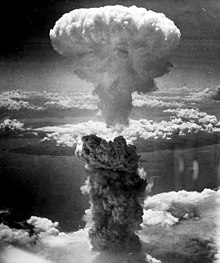
Nuclear weapons, instead of protecting us, now threaten us and people everywhere. President Obama, without suggesting a treaty, in June 2013 proposed a reduction "by one third" of the nuclear weapons held by Russia and the USA, but Russia wants other nuclear powers to join negotiations. Nine nations now reportedly have more than 17,000 weapons. What options do concerned people have for encouraging that nuclear weapons either be reduced or eliminated?
Since August is Nuclear-Free Future Month, some congregations or individuals might want to write their Congressperson urging that the US start negotiations on a treaty to abolish nuclear weapons. It's time to consider doing so when even former “cold warriors” like Henry Kissinger, George Shultz, William Perry and Sam Nunn called for complete elimination of nuclear weapons in the Wall Street Journal in 2010.
On a more modest scale, at least 22 members of Congress are calling for significant reductions in Pentagon spending, and the nuclear arsenal probably would receive major cutbacks. www.peace-action.org, search "nuclear weapons."
In the House of Representatives, Ed Markey introduced the "Smarter Approach to Nuclear Expenditures (SANE) Act," HR 1506, which would make cuts to spending on nuclear weapons totaling more than $100 billion over the next decade. If your representative has not co-sponsored this bill, suggest action. www.fcnl.org
A further request to President Obama could be that he clarify the U.S.A.'s nuclear posture by announcing that the USA will not use nuclear weapons first under any circumstances. Nuclear Age Peace Foundation: www.wagingpeace.org
In addition, the Obama administration proposes to spend $7.87 billion on the National Nuclear Security Administration for research and maintenances of the US nuclear arsenal. Some letters to the President might question the mixed messages. www.nukewatchinfo.org
Other critical issues may flood the media now, but your phone calls, letters and emails about nuclear weapons deserve your efforts on behalf of the survival of humanity.
More resources:
www.icanw.org International Campaign to Abolish Nuclear Weapons
www.forusa.org, search "nuclear weapons"
www.warresisters.org, search "resources" for "Remembering Hiroshima and Nagasaki"
www.elca.org for earlier statements about nuclear weapons
www.ploughshares.org
www.globalzero.org/en
www.takepart.com/zero
From the LPF Archives:
For People of Faith: AN URGENT CALL (2003)
On August 6th we remember the anniversary of the atomic the bombing of Hiroshima in 1945.
We invite you to pray for peace.
On August 6th we remember the anniversary of the atomic the bombing of Hiroshima in 1945.
We invite you to pray for peace.
Animation of Nuclear History
Mar 28, 2012
Vote Coming Thursday on Immoral Budget: Act Now
This Thursday, your representative will vote on a budget that has almost everything upside down. The proposal by Budget Committee Chair Paul Ryan would increase the Pentagon budget and lower taxes on the wealthy while dismantling programs that provide food, health care and other services for the most vulnerable. Please urge your representative to vote "no" on Paul Ryan's budget proposal. For more information, please visit the action alert page from FCNL.
Oct 11, 2011
Advocacy Alerts
Calling for a Faithful Budget
"Make Your Voice Heard"
In the face of massive deficits and the daunting task ahead of balancing the federal budget, Congress needs to hear your voice: a moral voice of reason, calling for placing the needs of the most vulnerable at the center of budget policy decisions.
Twelve legislators, known as the "Super Committee," have been given immense power over budget decisions that will impact many years to come. If partisan politics rears its ugly head and the committee fails to reach consensus, then an additional 1.5 trillion in across-the-board cuts will become mandatory, slashing social safety net programs such as WIC, SNAP, Medicaid, Social Security, and others. . . read more & take action
Tell Congress not to cut
life-saving foreign assistance
In the parable of the Good Samaritan, Jesus sets a standard for how we should greet those who have been cast on the side of the road by poverty and violence. The famine and drought that continues to devastate the Horn of Africa is just one stark reminder that we must support those in need of life-sustaining food and support. . . read more on p.2 of our advocacy alert
Apr 15, 2011
Urgent Alert
Dear Friend of Justice and Peace,
We face an urgent, significant threat to U.S. humanitarian aid. A new proposal in the House of Representatives will eliminate 43% of the funding for international affairs requested by Obama. This vote on 2012 funding comes right after activity over 2011 funding, and could easily be missed. A 43% cut would seriously imperil the ability thofe United States to meet needs for humanitarian aid or genocide prevention.
If possible, please call your member of Congress, and forward to other individuals interested networks urging them to call their Representative in opposition to H.Con.Res.34. The call would have to be made this morning. More details are in the 'Save Darfur' sample email below to share with your friend list.
Please be in touch with LPF or Save Darfur with questions, and thanks for all you do.
All the best,
Glen Gersmehl, LPF
Joe Maddens, Save Darfur
--------------------------------------------------------------------------------------------------
SAMPLE EMAIL
Fight Devastating Cuts to the International Affairs Budget
Dear _________,
Please call your Representative today or tomorrow morning and urge him or her to vote against H.Con.Res.34.
Tomorrow the House of Representatives is expected to vote on H.Con.Res.34. If passed, H.Con.Res.34 would drastically reduce the spending level in the international affairs account for the 2012 fiscal year. The account is critical because it:
A robust international affairs account is essential for national security and is supported by top military officials including Secretary of Defense Robert Gates, Chairman of the Joint Chiefs of Staff Mike Mullen and Commander of the U.S. Forces in Afghanistan General David Petraeus. Last year, Secretary Gates appeared alongside Secretary of State Hillary Clinton to speak out against cuts to the international affairs budget because of their risk to national security.
Please call your Representative today or tomorrow morning and urge him or her to vote against H.Con.Res.34 due to its drastic cuts to the international affairs budget.
Thank you.
We face an urgent, significant threat to U.S. humanitarian aid. A new proposal in the House of Representatives will eliminate 43% of the funding for international affairs requested by Obama. This vote on 2012 funding comes right after activity over 2011 funding, and could easily be missed. A 43% cut would seriously imperil the ability thofe United States to meet needs for humanitarian aid or genocide prevention.
If possible, please call your member of Congress, and forward to other individuals interested networks urging them to call their Representative in opposition to H.Con.Res.34. The call would have to be made this morning. More details are in the 'Save Darfur' sample email below to share with your friend list.
Please be in touch with LPF or Save Darfur with questions, and thanks for all you do.
All the best,
Glen Gersmehl, LPF
Joe Maddens, Save Darfur
--------------------------------------------------------------------------------------------------
SAMPLE EMAIL
Fight Devastating Cuts to the International Affairs Budget
Dear _________,
Please call your Representative today or tomorrow morning and urge him or her to vote against H.Con.Res.34.
Tomorrow the House of Representatives is expected to vote on H.Con.Res.34. If passed, H.Con.Res.34 would drastically reduce the spending level in the international affairs account for the 2012 fiscal year. The account is critical because it:
- Ensures that the United States has the diplomatic capacity to support peace in Darfur and throughout Sudan;
- Saves lives by supporting humanitarian aid programs in countries where populations are the most vulnerable. Examples include Sudan, Burma, Ivory Coast and the Democratic Republic of Congo;
- Works to ensure more effective genocide and mass atrocity prevention and civilian response; and
- Furthers the United States’ national security interests.
A robust international affairs account is essential for national security and is supported by top military officials including Secretary of Defense Robert Gates, Chairman of the Joint Chiefs of Staff Mike Mullen and Commander of the U.S. Forces in Afghanistan General David Petraeus. Last year, Secretary Gates appeared alongside Secretary of State Hillary Clinton to speak out against cuts to the international affairs budget because of their risk to national security.
Please call your Representative today or tomorrow morning and urge him or her to vote against H.Con.Res.34 due to its drastic cuts to the international affairs budget.
Thank you.
Apr 7, 2011
Just how much is a BILLION dollars?
Its budget time in Washington and we hear a lot of big numbers being thrown around. But just how big are these numbers?
Thanks to Wayne Cornelius of the Raleigh, North Carolina LPF Chapter for this piece.
I saw this image in the latest issue of the statistical journal, Significance. (Our friend, Dennis Boos, has contributed to Significance on other topics, by the way. But he’s not involved with this work.) It reminded me of the accordion-folded graph about the U.S. national budget that was circulated at last year’s State Fair Peace Booth. The author is a London-based journalist. In his own words,
This image arose out of frustration with media reporting of billion dollar amounts. That is, that they’re meaningless without context. But they’re continually reported as self-evident facts. 500 billion for this war. 50 billion for this pipeline. Literally mind-boggling amounts of money.So here we’ve scraped reported figures from The New York Times, The Guardian, and other news outlets and visualized them as a treemap (?). So you can see in one place figures that would otherwise be scattered across multiple news reports.
http://www.informationisbeautiful.net/2010/the-billion-dollar-o-gram-2009/. Credit for the graphic and interpretation, David McCandless,2009 Creative Commons license (http://creativecommons.org/licenses/by-nc/3.0/). Data: http://bit.ly/bndollar
One further note: When you see a BILLION mentioned in the foreign press, it could be off by a magnitude because there is no common definition of how much a billion or a trillion is!
see: http://eyeful-tower.com/muse/billion.htm
Jun 30, 2010
Quick Action Needed on War Supplemental
War Supplemental Expected in the House This Week
Supplemental spending for the war in Afghanistan will be voted on later this week, perhaps as early as Wednesday. The Majority Whip sent out a whip question Friday asking Democrats whether they would vote in favor of a) the Afghanistan war money, and b) all the other supplemental funding, a sign that a vote is imminent.
Please contact your Representative, and ask him or her to 1) vote "NO" on the war money 2) co-sponsor the McGovern bill and vote for a corresponding amendment, requiring the President to establish a timetable for military withdrawal from Afghanistan.
Call:
The Capitol Switchboard is 202-225-3121. Ask to be connected to your Representative's office. Try to get the Foreign Policy Legislative Assistant on the phone; tell whomever you get to speak with that you urge the Representative to vote no on war funding and to co-sponsor McGovern's bill and vote for McGovern's amendment; try to get them to say how the Representative will vote.
Please report back to us any result of your query at the following two places: for LPF, please email ggersmehl@hotmail.com and if you can, also send your email to: www.justforeignpolicy.org/act/feingold-mcgovern
for more information see: http://salsa.democracyinaction.org/dia/track.jsp?v=2&c=wh0LUZik0%2BkRJ7ICYIHKwyN%2BUO6c5syB
Lutheran Peace Fellowship, www.lutheranpeace.org, Afghan Resources
Supplemental spending for the war in Afghanistan will be voted on later this week, perhaps as early as Wednesday. The Majority Whip sent out a whip question Friday asking Democrats whether they would vote in favor of a) the Afghanistan war money, and b) all the other supplemental funding, a sign that a vote is imminent.
Please contact your Representative, and ask him or her to 1) vote "NO" on the war money 2) co-sponsor the McGovern bill and vote for a corresponding amendment, requiring the President to establish a timetable for military withdrawal from Afghanistan.
Call:
The Capitol Switchboard is 202-225-3121. Ask to be connected to your Representative's office. Try to get the Foreign Policy Legislative Assistant on the phone; tell whomever you get to speak with that you urge the Representative to vote no on war funding and to co-sponsor McGovern's bill and vote for McGovern's amendment; try to get them to say how the Representative will vote.
Please report back to us any result of your query at the following two places: for LPF, please email ggersmehl@hotmail.com and if you can, also send your email to: www.justforeignpolicy.org/act/feingold-mcgovern
for more information see: http://salsa.democracyinaction.org/dia/track.jsp?v=2&c=wh0LUZik0%2BkRJ7ICYIHKwyN%2BUO6c5syB
Lutheran Peace Fellowship, www.lutheranpeace.org, Afghan Resources
Dec 8, 2008
Taking action for what we believe
Normally, not much happens in politics between election and inauguration. One thing that still has to happen is passage of the ’09 federal budget. And it is obvious that action on our faltering economy can’t wait for a new Congress and administration. Both are places in great need of serious thinking, engaged citizenship, and caring action. There is a rare opening in the ’09 budget for Congress to greatly help poor people in other countries. Citizen efforts have succeeded in putting on the agenda a $5 billion increase in development aid and we won the spring Budget vote in the Senate by a 72 to 23 vote, so this can pass!
Subscribe to:
Posts (Atom)
