Showing posts with label Peace legislation. Show all posts

Jun 29, 2013

Nuclear Weapons: Status Quo, Reduction, or Elimination?

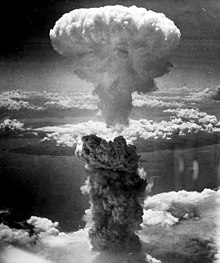
Here's a fact that may prove disturbing to serious followers of Jesus, the Prince of Peace:  more than 6,000 nuclear weapons exist in the USA today, ready for deployment.

Nuclear weapons, instead of protecting us, now threaten us and people everywhere.  President Obama, without suggesting a treaty, in June 2013 proposed a reduction "by one third" of the nuclear weapons held by Russia and the USA, but Russia wants other nuclear powers to join negotiations.  Nine nations now reportedly have more than 17,000 weapons.  What options do concerned people have  for encouraging that nuclear weapons either be reduced or eliminated?

Since August is Nuclear-Free Future Month, some congregations or individuals might want to write their Congressperson urging that the US start negotiations on a treaty to abolish nuclear weapons.  It's time to consider doing so when even former “cold warriors” like Henry Kissinger, George Shultz, William Perry and Sam Nunn called for complete elimination of nuclear weapons in the Wall Street Journal in 2010.

On a more modest scale, at least 22 members of Congress are calling for significant reductions in Pentagon spending, and the nuclear arsenal probably would receive major cutbacks.  www.peace-action.org, search "nuclear weapons."

In the House of Representatives, Ed Markey introduced the "Smarter Approach to Nuclear Expenditures (SANE) Act," HR 1506, which would make cuts to spending on nuclear weapons totaling more than $100 billion over the next decade.  If your representative has not co-sponsored this bill, suggest action.  www.fcnl.org

A further request to President Obama could be that he clarify the U.S.A.'s nuclear posture by announcing that the USA will not use nuclear weapons first under any circumstances.  Nuclear Age Peace Foundation: www.wagingpeace.org

In addition, the Obama administration proposes to spend $7.87 billion on the National Nuclear Security Administration for research and maintenances of the US nuclear arsenal.  Some letters to the President might question the mixed messages.  www.nukewatchinfo.org

Other critical issues may flood the media now, but your phone calls, letters and emails about nuclear weapons deserve your efforts on behalf of the survival of humanity.

More resources:
www.icanw.org International Campaign to Abolish Nuclear Weapons
www.forusa.org, search "nuclear weapons"
www.warresisters.org, search "resources" for "Remembering Hiroshima and Nagasaki"
www.elca.org for earlier statements about nuclear weapons
www.ploughshares.org
www.globalzero.org/en
www.takepart.com/zero

From the LPF Archives:
For People of Faith: AN URGENT CALL (2003)
On August 6th we remember the anniversary of the atomic the bombing of Hiroshima in 1945.
We invite you to pray for peace.
Hiroshima-Nagasaki Day of Prayer for PeaceBulletin Insert (2005)

Animation of Nuclear History

Apr 9, 2013

A New Vision of Peacemaking – LPF strengthens its core focus


Lutheran Peace Fellowship held four conference calls in recent weeks with LPF leaders in every part of the country.  We discussed issues we care about:  gun violence, conflicts around the globe, militarism. . . -- and how LPF might be more effective in confronting these challenges.  We also discussed how we can make the most of LPF’s national gathering this summer to strengthen our program and our connections and friendships with one another.
More of what we explored is shared in a new resource entitled, “A New Vision of Peacemaking” – and a letter to you and LPF members more widely. Here are some highlights:


  • To strengthen our core focus:  to confront violence and war, militarism and injustice; and to share the alternative Jesus taught – the biblical vision of Shalom, of active nonviolence. 
  • To support LPF members in taking effective action on today’s pressing issues – gun control and soaring military budgets, veterans’ issues and youth facing military service. . . .
  • To share LPF activities and resources with friends and co-workers, and also with our congregation to encourage their use in adult forums, youth group, etc.


We also noted that in some cases, there are relatively few Lutheran voices lifting up these issues and offering advocacy opportunities and resources.  LPF re-committed to changing that.  You can help Lutheran congregations, groups, and leaders better support peace with justice.  Share the New Vision resource, consider attending the national LPF gathering this summer. For more information, click on the links above.

Mar 26, 2013

Support a strong Arms Trade Treaty

Time is running out. The final week of negotiations for an Arms Trade Treaty is now underway. The treaty presents a great opportunity to prevent the world's worst catastrophes by keeping weapons out of the hands of warlords, war criminals, and genocidal dictators. Urge President Obama to support a strong Arms Trade Treaty.

Sep 12, 2012

Advocacy Alert: 2012 Farm Bill


Recent gains we’ve made in addressing both domestic and international hunger and poverty face their worst threat from Congress in years - just when a devastating drought is set to drive up food prices everywhere. The House version of the farm bill proposes deep cuts in world hunger programs – as well as in food stamps (SNAP) and aid to struggling rural communities in the U.S. Take action now

Mar 28, 2009

Advocacy Update

We live in an exceptionally dramatic period calling for renewed and faithful advocacy. Here are nine brief windows on the challenges we face, and on resources that might be of help to individuals and groups seeking to respond to the gospel call of Shalom:

1. A very smart investment
2. Making foreign aid accountable
3. Educational forums
4. Misplaced AIG scandal backlash
5. Roots of economic crisis
6. Hey! This is just gambling!
7. One of ours?
8. More Lutheran sources
9. The impact of the economic crisis on nonprofits

1. LPF’s top current advocacy priority is lobbying Congress and the administration to significantly increase and improve the effectiveness of US development assistance both for humanitarian reasons, and to increase security for the affected regions and for the US. Increased development aid would pay for itself from its security benefits alone! In fact, it’s hard to think of any smarter investment of 6-10 billion dollars in the entire US budget.

Your representatives and Sec. of State Hillary Clinton could very much use supportive letters to help them keep aid at the priority level it needs to be.

Here is how to make yourself heard.

2. The Christian Science Monitor published a useful article yesterday entitled, "How to make US foreign aid work." The subtitle summarizes the thrust of the commentary: "Give recipients a say in where the money goes." To read more, go to: http://www.csmonitor.com/2009/0318/p09s02-coop.html

3. We would be happy to help you organize an educational forum or workshop in your congregation or area. Email us at lpf@ecunet.org or call the LPF office at 206-720-0313. How to plan a LPF training gives the basics of organizing a LPF training
in your college or university, congregation or community.

4. The economic crisis continues to dominate the news. Regrettably, many key issues continue to be obscured by careless or opportunistic media coverage. The Washington Post has several useful articles. See the daily news summary (which the WP sends out free): http://view.ed4.net/v/E5QODK/JIV8W/NSSSFOG/4VE0EV/MAILACTION=1

5. An even more important aspect of current misinformation or lack of information is the fact that much media coverage has slighted the deeper structural problems in favor of scare reporting or blaming the victims. Many readers of this e-news have seen one or more versions of an op-ed written by LPF national coordinator, Glen Gersmehl, entitled "Delving deeper, nourishing hope. For more, go to, www.pjrcbooks.org/
Fin_Crisis.html


6. The above article lifts up the core role that’credit default swaps’ played in the crisis. Amazed that you haven’t heard of CDS? The lead editorial in this past Sunday’s NY Times is one of a relative few national or regional commentaries to focus on the role of CDS in the crisis. Here’s a particularly intriguing (and shocking) point:

"In the manic years of this decade, credit default swaps took off as a way to bet on the likelihood of default by a firm or an investment portfolio, without having to own any financial interest in the firm or portfolio. That is definitely not insurance, it is gambling."

For the full NY Times editorial, go to http://www.nytimes.com/2009/03/15/opinion/

7. One of ours? We might add that a superb NY Times business editor, Gretchen Morgenson, has been one of the most consistently useful analysts on the current crisis and its public policy and moral dimensions, for example, a Jan. 25 commentary: Time to Unravel the Knot of Credit-Default Swaps and a March 15 piece: At A.I.G., Good Luck Following the Money. Curious about Morgenson’s rare moral sensibilities, we finally looked up her profile and discovered she’s a St. Olaf grad. Could that be relevant?

8. It has been with some embarrassment that we note that Christian leaders and faith-based groups across the denominational spectrum have been all but invisible in the public debate about the economic crisis. So it is good news to report that’s the focus of the current issue of the Journal of Lutheran Ethics offering a range of views. Check it out at: www.elca.org/jle

9. The upcoming issue of The Nation magazine has a cover story that brings us full circle: the impact of the economic crisis on nonprofits. It explores several examples of that impact and a number of worrisome projections and statistics, for example, that 100,000 nonprofits could close their doors as a result of the crisis. It is a reminder for each of us to support those groups like LPF that we are counting on to help us act on our faith in the world. See: www.thenation.org


Blessings and Peace!


To contact us by email lpf@ecunet.org or lpfyouth@gmail.com. For links to lpf enewsletters and blogs, additional advocacy information, useful group discussion activities, leader tips, and resources on a wide range of topics, www.lutheranpeace.org

Feb 15, 2008

Global Poverty Act Senate Progress

As you may already be aware, the Global Poverty Act was considered in the Senate Foreign Relations Committee on February 13th and we were very pleased to see that the Committee passed the bill this morning!

The Global Poverty Act was originally sponsored in the House by Rep. Adam Smith (D-WA) and it passed there last fall by a voice vote (indicating it wasn't controversial). Senator Obama introduced the Senate version in December along with Chuck Hagel (R-Neb) and Maria Cantwell (D-WA). It has since gathered great support from the development community, and has cosponsors across the political spectrum from Hagel and Lugar, to Feinstein, Biden, and Dodd.

The bill makes two important contributions. First it commits Congress and U.S. policy more completely to supporting the Millennium Development Goals (MDGs): These MDGs represent the first time the nations of the world, all 190 of them, agreed on a set of eight development benchmarks to achieve by 2015, notably cutting extreme poverty in half. Second, the bill would help coordinate and make the most of U.S. assistance (currently spread over a couple dozen different budget lines). It doesn't add any funding to current poverty related development assistance, but that can only help it pass in a politicized and abbreviated election-year congressional session.

By all the evidence there's momentum behind the bill and it fairly cries out for people of good will to do what we can to help it pass a floor vote in the Senate!

Now would be a great time for a 3-5 sentence postcard, email, or phone call to urge your members of the Senate to vote for, support, and work to pass the Global Poverty Act.


Glen Gersmehl