Sep 28, 2013

New Opportunities . . . Dangerous Politics

updated Oct 5th
Just when citizen input might do some good, 
the political process seems consumed by all the 
partisan drama in Washington, DC.   And indeed, 
there are a remarkable number of new opportunities 
for peacemaking and justice seeking.  We should 
not stop encouraging our elected officials to: 

*Support international efforts to remove Syria's
chemical weapons, end the fighting, and provide aid
for civilians impacted by this war – especially refugees.

*Find ways to address the role of Syria's worst 
drought in 70 years in aggravating the humanitarian
impact of the war; these problems aren't separate.

*Pursue new openings for diplomacy with Iran.

*Pass a U.S. budget with significant and long- 
overdue cuts in defense spending.

*Push through sensible gun control legislation in 
the wake of the horrific Navy Yard mass shooting.

Now is the time to encourage our friends and
congregation members to join us in advocating
for movement on whichever of these issues 
they feel strongly about . . .

And, of course, we and our nation
are confronted by another problem
with huge peace and justice impact:

Our voice is also needed urging Congress to act 
now to end the government shutdown that has cut so
many vital services, and threatens an even more damaging
default.  And Congress needs know we strongly oppose ending
the shutdown at the expense of key service programs, especially 
for the most vulnerable.  As the default deadline approaches, 
careful reflection on America’s needs can be undercut by 
last minute – and often back-room – negotiations. The 
House voted to defund Obamacare without such open
discussion. And it has voted for a $40 billion cut to
SNAP (food stamps), one of the most effective – 
and efficient – programs serving those in need.

While we should trim spending where we can 
(and the Pentagon is one place!), many program cuts 
being considered would seriously hurt many Americans, 
especially the most vulnerable, and actually endanger the 
economic recovery. The focus should be on jobs, not 
cuts to programs like Medicare, Medicaid, Social 
Security, and vital safety net programs.

The U.S. is at a critical moment. Our friends 
and members of our congregations probably need 
encouragement to set aside all the inducements to
just “zone out” on these issues. We can support 
and inspire one another as we each contact 
our elected officials and share our sense 
of where their focus might be, e.g.: 

new opportunities for 
peacemaking... justice
for the poor... jobs....


"At heaven's door, St. Peter is probably not going to ask you much about what you did about keeping government small. But he is going to ask you what you did for the poor."  E.J. Dionne quoting John Kasich, Republican Gov. of Ohio, and a top lieutenant in Newt Gingrich's revolution in the 1990s.

A few especially helpful sources:

“Why the Government Shutdown Is Unbiblical”
by Jim Wallis, Sojourners,
http://sojo.net/blogs/2013/10/03/why-government-shutdown-unbiblical

“8 Reasons Democrats Should Refuse a Shutdown ‘Grand Bargain’ ”
by Richard Eskow, Campaign for America's Future blog, Oct. 4, 2013

http://www.commondreams.org/view/2013/10/04-3

"Lasting Damage From the Budget Fight,"
editorial, NY Times, 9-26-13
http://www.nytimes.com/2013/09/26/opinion/lasting-damage-from-the-budget-fight.html?src=recg

"A Federal Budget Crisis Months in the Planning"
by Sheryl Gay Stolberg and Mike McIntire, NY Times, 10-6-13 http://www.nytimes.com/2013/10/06/us/a-federal-budget-crisis-months-in-the-planning.html

"Obamacare's strange bedfellows"
by E.J. Dionne, Jr., Washington Post, 9-22-13
http://articles.washingtonpost.com/2013-09-22/opinions/42299449_1_medicaid-expansion-bill-john-kasich-medicaid-issue

"Free to Be Hungry"
by Paul Krugman, NY Times, 9-23-13
http://www.nytimes.com/2013/09/23/opinion/krugman-free-to-be-hungry.html?_r=0

"US-Iran: Breakthrough After Decades of Silence,"
ABC News, 9-28-13 http://abcnews.go.com/Politics/wireStory/us-iran-leaders-talk-time-1979-20401912

"The UN Needs a Larger 'War on Poverty'"
by Ralph Nader, 9-27-13
http://www.huffingtonpost.com/ralph-nader/united-nations-poverty_b_4005364.html

Other useful links:  www.billmoyers.com - http://robertreich.org/ - www.yesmagazine.org - www.truth-out.org - www.democracynow.org - www.thenation.com

  Please share with others. . . 
  To see previous LPF blog posts . . .
Further resources: www.lutheranpeace.org


Sep 23, 2013

Book Review: Courage to Think Differently

Signed copies of this remarkable book are available from LPF (as supplies last), $10 including postage and handling, or free with a contribution of $75 or more. lpf@ecunet.org.

Imagine more than 30 notable prophetic voices sharing their insights on a wide range of issues that matter for our quality of life and the world's survival. That's the theme of Courage to Think Differently, by author and editor George S. Johnson, former director of the American Lutheran Church's hunger program. He brings together a diverse spectrum of writers including Larry Rasmussen, Frances Moore Lappe, Bill Moyers, Vandana Shiva, Elie Wiesel, Elisabeth Schussler Fiorenza, and David Korten. In the process, Johnson offers us a book so creative, so spiritually compelling that it practically glows in your hands.

"Jesus was constantly encouraging people to think differently…to look at deeper questions that don’t have easy answers," Johnson says. He adds that this book is not about giving pat answers or dispensing guilt; nor is more generosity the answer. A new mindset is called for, that asks questions such as "Am I believing in Christ, or following Christ?"

He also observes that not every person nor everything will change -- or needs to change. The book offers space for the reader to come to conclusions other than the ones presented. The point is to explore in fresh ways the foundations of our thinking and decision-making in the light of our Christian faith. Some of our most creative religious thinkers such as Diana Butler Bass, Walter Bruggemann, Susan Brooks Thistlewaite, Brian McLaren, and Shane Claiborne are all here.

Seven sections offer such creative starting points as "irrelevant religion," "thin democracy," "silence," and more. Teaching aids in the Appendix include "The Shakertown Pledge" (nine declarations for world citizens); and "How to Hang in There for the Long Haul" (21 notes for peace and justice activists). This book is a significant , mind-expanding anthology for every Christian who seeks to "do justice, love kindness, and walk humbly with God."

-- Reviewed by Lily Wu, LPF board member and editorial consultant

Johnson, George S. Courage to Think Differently. Cambridge, MN: Adventure Publications, 2013. 304 pp. Also available from www.adventurepublications.net (enter the book title in the search box).

Sep 17, 2013

Syria: Keeping Our Eye on the Ball

Diplomacy and action around Syria’s chemical weapons are very encouraging.  But we must direct our focus onto tasks that are at least as urgent: First, urge elected officials to oppose US military action which is still a possibility. And more broadly, to advocate for the US to build international efforts to contain and end the fighting, deal with its impact on civilians, aid refugees, and tackle the roots of the conflict – tasks which are still virtually unaddressed by the US or the international community.

Despite the falloff in media and public attention, our role as citizens is at least as vital and compelling, and the issues we face at least as urgent and threatening as chemical weapons.  Here are specific things we can ask of the US:  a) use our diplomatic clout to get all external parties to end the shipment of arms to all sides; b) use the agreement on chemical weapons as a step toward bringing about a ceasefire; c) work on long-term solutions to the roots of the conflict and for a political agreement that is just and ends the war; d) change US budget priorities: the world spends just $1 on conflict prevention for every $1,885 it spends on military resources. As Mark Twain wrote, “when your only tool is a hammer, you tend to see every problem as a nail.” (See LPF’s budget priorities activity for more on this key issue) and e) increase USA aid to the United Nations High Commission on Refugees to assist Syrian refugees.

With the International Day of Prayer for Peace (IDPP) on Sept. 21,  this Sunday is a great time to offer or ask for prayers on Syria in church and share what people of faith can do (see LPF’s recent IDPP blog post).

As Christians, our advocacy flows from our commitment to active nonviolence, the Way of Jesus. It’s time to urge the US to show some imagination and not just fall into old habits of military action, but instead, take on the challenge of addressing the roots of the conflict in Syria that could lead to a genuine political solution.
Thanks to the ELCA for the excellent map.

Sep 4, 2013

Syrian Crisis

For the US to initiate military action in Syria is a huge  mistake given the already violent complexity of the struggles there. Regardless of the motives, the great majority of times such military intervention has been tried in the past, the result has been to worsen not improve the situation.

Military action would be a sign of our failure as people of faith, a nation, and a global community. It is urgent that people of faith voice their opposition to their elected officials and to join in public ways of lifting up the truth in this matter. The people of Syria have already suffered too much. Let us not add to their suffering.

Many entities and individuals have come out against US military action, including ELCA Presiding Bishop Mark S. Hanson who sent a letter to President Obama asking him to continue diplomatic efforts rather than pursuing military action, and Bishop Munib Younan of the Evangelical Lutheran Church of Jordan and the Holy Land who urges a political solution not military intervention.

Bishop Younan, and even President Obama and Secretary of State John Kerry, stress the fact that there is no military solution out of this morass. So then why up the ante? An alcoholic does not drink his/her way to sobriety; we won’t achieve peace in Syria adding to war.

The use of chemical weapons by Syria is deplorable. But for this, President Assad and others in the Syrian military should be dealt with by legitimate international institutions and processes, not unilateral military action of the kind that has proved so disastrous in the past for the US -- and for the situations we assert we aim to help. . . . .

Our prompt action is needed, since the major news agencies and Capitol Hill sources indicate have said a Congressional vote could happen very soon.

Write to the president and your members of Congress urging them to strengthen international diplomatic efforts instead of authorizing military action that will only escalate an already brutal war.
Please also call the local offices of your senators and representatives (look up the telephone numbers on the FCNL website).

Here are some points to make on your call:
  • I oppose U.S. military action in Syria.
  • Military action will not stop the killing in Syria or bring those responsible for the use of chemical weapons to justice.
  • Diplomatic engagement with all regional stakeholders is what is called for right now.
  • The U.S. shouldn't respond alone to the use of chemical weapons. Our country should work through the U.N. and the International Criminal Court.
  • What is the member's position is on authorizing military force against Syria? Are there any local public events happening where I could express my views to the member directly?
Please write and/or call today and forward the url of this blogpost to 3 friends who might be willing to call too:
http://lutheranpeace.blogspot.com/2013/09/syrian-crisis.html

After You Call/Write: Go Public

Please consider writing a letter to your local newspaper and posting comments on the newspaper's website. Let your community know that war is not the answer to the use of chemical weapons in Syria, and, most importantly, mention the names of your senators and representative by name in the letter.

* Thanks to Phil Anderson, the ELCA, and the FCNL for writing much of this alert.

More background to the crisis:

Chomsky: Syria Attack Would Be "War Crime"

Natasha Lennard, Salon
Lennard writes: "Chomsky argued that even if the Obama administration can garner Congressional support for its planned missile strikes against Assad's regime, any such incursion would still constitute a 'war crime' in abrogation of international agreements."
READ MORE

Juan Cole | The US Is No Lone Ranger and Should Put That Six Shooter Away

Juan Cole, Truthdig
Cole writes: "The U.S. has had a checkered history in the use of unconventional arms, and is still among the most dedicated to retaining the ability to make, stockpile and use weapons that indiscriminately kill innocent noncombatants."
READ MORE

Even the mainstream press is raising some of these points:

9 questions about Syria you were too embarrassed to ask

Max Fisher, The Washington Post
READ MORE

Jul 29, 2013

International Day of Prayer for Peace

What do you think could happen if churches everywhere prayed and acted together to nurture lasting peace? . . . among individuals, families, communities and societies? Well, that opportunity is here! And we invite you to join us in this collective effort, now held annually on and around September 21.

In 2004, the World Council of Churches and the United Nations proposed the idea of an International Day of Prayer for Peace (IDPP) every September 21.  Since then, this has become a special day of festive activity in virtually every denomination worldwide.

This celebration runs alongside the Sept. 21 observance of the UN International Day of Peace (IDP).  The UN day calls for cease-fires in armed conflict, commitments to non-violence, and the peaceful resolution of disputes. This year's theme is "Education for Peace."  Creative plans include festivals, concerts, and a global Peace Wave with moments of silence at noon in every time zone. How might you and your congregation take part?

One place to start is to use LPF's peace prayers, which include a bulletin insert for the Day of Prayer for Peace. (This is a revision of the worship resource for the inaugural IDPP in 2004, used all over the world, that was written by LPF leaders.)  More links are offered below to help congregations and groups make Sept. 21 -- and the Sunday before or after -- a meaningful experience for all.

Resources:

Bulletin insert for the International Day of Prayer for Peace

ELCA webpage with Worship Resources for the International Day of Prayer for Peace, featuring links to the rich spectrum of prayers and worship materials from the World Council of Churches, as well as LPF.  Click here for further LPF Worship Resources. 

LPF Peace Education Resources include a variety of leaders’ guides for adult and youth forums, a one-page overview for “Encouraging Shalom in the Congregation,” as well as guides to many other resources from LPF and elsewhere.

LPF's "Path of Hope" shares brief descriptions of more than 140 peace and justice events and movements throughout history in which everyday people have been successful in bringing about peace and social change by nonviolent means.

United Nations: International Day of Peace is the official UN site with links to other resources and organizations.

On Earth Peace is an initiative from the Church of the Brethren, offering a variety of resources.

Videos:


Jun 29, 2013

Nuclear Weapons: Status Quo, Reduction, or Elimination?

Here's a fact that may prove disturbing to serious followers of Jesus, the Prince of Peace:  more than 6,000 nuclear weapons exist in the USA today, ready for deployment.

Nuclear weapons, instead of protecting us, now threaten us and people everywhere.  President Obama, without suggesting a treaty, in June 2013 proposed a reduction "by one third" of the nuclear weapons held by Russia and the USA, but Russia wants other nuclear powers to join negotiations.  Nine nations now reportedly have more than 17,000 weapons.  What options do concerned people have  for encouraging that nuclear weapons either be reduced or eliminated?

Since August is Nuclear-Free Future Month, some congregations or individuals might want to write their Congressperson urging that the US start negotiations on a treaty to abolish nuclear weapons.  It's time to consider doing so when even former “cold warriors” like Henry Kissinger, George Shultz, William Perry and Sam Nunn called for complete elimination of nuclear weapons in the Wall Street Journal in 2010.

On a more modest scale, at least 22 members of Congress are calling for significant reductions in Pentagon spending, and the nuclear arsenal probably would receive major cutbacks.  www.peace-action.org, search "nuclear weapons."

In the House of Representatives, Ed Markey introduced the "Smarter Approach to Nuclear Expenditures (SANE) Act," HR 1506, which would make cuts to spending on nuclear weapons totaling more than $100 billion over the next decade.  If your representative has not co-sponsored this bill, suggest action.  www.fcnl.org

A further request to President Obama could be that he clarify the U.S.A.'s nuclear posture by announcing that the USA will not use nuclear weapons first under any circumstances.  Nuclear Age Peace Foundation: www.wagingpeace.org

In addition, the Obama administration proposes to spend $7.87 billion on the National Nuclear Security Administration for research and maintenances of the US nuclear arsenal.  Some letters to the President might question the mixed messages.  www.nukewatchinfo.org

Other critical issues may flood the media now, but your phone calls, letters and emails about nuclear weapons deserve your efforts on behalf of the survival of humanity.

More resources:
www.icanw.org International Campaign to Abolish Nuclear Weapons
www.forusa.org, search "nuclear weapons"
www.warresisters.org, search "resources" for "Remembering Hiroshima and Nagasaki"
www.elca.org for earlier statements about nuclear weapons
www.ploughshares.org
www.globalzero.org/en
www.takepart.com/zero

From the LPF Archives:
For People of Faith: AN URGENT CALL (2003)
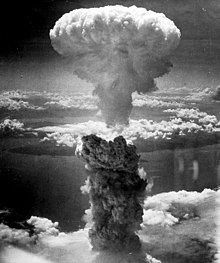
On August 6th we remember the anniversary of the atomic the bombing of Hiroshima in 1945.
We invite you to pray for peace.
Hiroshima-Nagasaki Day of Prayer for Peace, Bulletin Insert (2005)

Animation of Nuclear History

Jun 20, 2013

US Budget Plans: Citizen Input Sorely Needed

You’ve heard it said that if you really want to understand anything in politics, you need to “follow the money.” By that standard, Congress is getting down to business as it begins to vote on major Appropriations bills.

For the most crucial programs, the results so far are deeply disturbing.  The House has voted to increase military spending by 5.4%!  And they mean to pay for it by slashing funding on everything else by nearly 20% -- education, health care, emergency food and housing programs, etc.  We need to respond!

Those cuts total 45 billion dollars for domestic and non-defense international programs for the coming fiscal year (which begins Oct. 1).  Appropriations for the Departments of Education, Labor, and Health and Human Services and in FY 2014 will be cut 18.6 % from the current year. And that comes on top of the already painful cuts required by the infamous sequester. 

Thus the House intends to further slash funding for many safety net and service programs like meals on wheels for seniors, school meals for low income students, food stamps (SNAP) for families, health care and housing assistance, etc. To be blunt, millions of Americans are in trouble if we don’t act. 

Why such large cuts? For one thing, the House ignored the Budget Control Act requirement that half of the $110 billion decrease it mandated must come from the defense budget.  Cutting defense makes sense: the US spends more on military than the rest of the world combined. (China spends only 17% as much as we do.) So in tight financial times, and as we wind down military involvement in Afghanistan, it is simply unbelievable that the House has voted to increase military spending by 5.4%!  And it's even more astonishing that to do so, it reduces domestic and non-defense expenditures far more than was required. 

We urge you to join us in contacting your members of Congress to express how you feel about the FY 2014 appropriation levels voted on by the House.  LPF has joined a sign-on letter from the Coalition on Human Needs to protest these cuts; we urge you to invite your congregation, advocacy committee or community group to discuss and sign it as well  (and as soon as possible).  The Coalition on Human Needs brings together national organizations committed to serving the most vulnerable in our society. The ELCA, Bread for the World and Lutheran Services in America are among its many members.  To read the letter and to share the simple form for a group to sign on, click here. Also, LPF has just updated a computer activity on Budget Priorities exploring these issues in an engaging and interactive way that is great for group discussion and action (includes a leaders guide with handouts).