Now when they had departed, behold,( an angel of the Lord appeared to Joseph in a dream and said, "Rise, take the child and his mother, and flee to Egypt, and remain there until I tell you, for Herod is about to search for the child, to destroy him." And he rose and took the child and his mother by night and departed to Egypt and remained there until the death of Herod. (Matthew 2:13-15)
World Refugee Day, observed June 20 each year, is dedicated to raising awareness of the situation of refugees throughout the world.
The Radical History of Mother’s Day www.nationofchange.org
There’s a good number of us who question holidays like Mother’s Day in which you spend more time feeding money into a system that exploits our love for our mothers than actually celebrating them. . . .
Mother's Day: The Radical Roots in the U.S.A. www.allvoices.com
Mother's day in the U.S. was originally associated with two radical women activists Julia Ward Howe and Anna Maria Jarvis. Howe was well known as an abolitionist, suffragist and author . . . .
The Israel-Palestine situation is definitely one of the most challenging and complex in the world today. We asked LPF board member Kathy Adam to step back and reflect a little on her own journey of understanding and action on the issues, and to share some especially helpful links to information -- including several on well-known Lutheran Palestinian pastor Mitri Raheb. Here is Kathy on her experience:
In
1998, my
husband and I went to Israel on a “Footsteps of Jesus”tour. We were awed, walking where Jesus had walked
over 2,000 years ago. Our spirits soared as we followed those
footsteps…. At the same time, more and more questions arose for usabout what was happening all around us.
For example, we
were overwhelmed by the number of soldiers
we encountered everywhere, Israeli Defense
Forces
heavily armed with automatic weapons. We
didn’t yet understand the real scope of the situation in which we
found ourselves. We were in the lands of
Israel and Palestine. The Palestinians –
a people I didn’t even know existed
in the 20th century – were under occupa-tion since 1967 by
the State of Israel. We discovered this
was anything but a peaceful land.
Since 1998 I have
visited the region five times to learn
and observe. Sadly I have witnessed Palestinian homes bulldozed to make way
for Israeli settlements, ancientgroves of olive trees uprooted,
Palestinian farmers and shopkeepers cut
off by walls from their lands and livelihoods. I have talked with people who have had family members, including children, arrested and jailed and even tortured.
But during that first
trip, having only our Sunday School Biblical knowledge to help us place the
contemporary situation into perspective, we
found ourselves lost in our limited understanding. I’m verygrateful that our tour group was able
to meet with Mitri Raheb, pastor of
Christmas Lutheran Churchin
Bethlehem, right up the hill from the Church of the Nativity where it is
said Jesus was born. He
invited our tour group into a room with a circle
of chairs one evening. It was then that the Biblical story and the
contemporary situation started to come together for us.
We learned that for over 2,000 years, there has been a Palestinian presence in the land, and
that for mostof that time, Palestinians – mostly Christian and
Muslim – lived side-by-side with Jews in relative peace.It was a political movement,Zionism,that
from its origins at the end ofthe19th Century has caused the problems that have
become so severe ever since.
In the years since meeting Pastor Raheb, I’ve done all I can to inform myself about the region.
Perhaps you too have read or heard Pastor Raheb, and beeninspiredby this visionaryLutheran advocateof peace
with justice. Itwasno
surprise to me that he
recently received the
prestigious Swedish Olof Palme
Prizeof 2015.
He shares this award with Israeli journalist Gideon Levy, who
campaigns for his country's withdrawal from Palestinian territories. They both received the award foroffering “aglimmerof hopetoaconflictthat fortoo long has plagued and continues to plague millions of people and affects
world peace.”
Afew
years agoIbegan volunteeringwith
“BrightStarsof Bethlehem,”the US organization supporting the ministries led by Pastor Raheb in Palestine. I’m often encouraged by Mitri Raheb’s insight into the challenge of peacemaking: “We’ve been conditioning ourselves to run a
hundred yards, but we are in fact in a marathon,” he says. “Our struggle is neither easy nor short, and wehave
to condition ourselves for the long
challenge ahead. We need moments of joy and hope inthe midst of all this hopelessness.
Otherwise we won’t be able to
continue our journey.”
Indeed, peace does
not come
easily in this part of the
world, as with conflicts in so many other regions of the world.
Nor does peace always come easily in our communities, or even in some of our
close relationships. In our efforts to bring about peace in the
various areas of life, we need moments of joy and hope. We also
need resources to help
us. I
was impressed by the resources
offered by LPF when I first explored them a few years ago.
More recently,
I have been grateful for the
opportunity tocontributeto LPF’s
efforts to share informationabout these issues and struggles. To help frame advocacy options. To help
support this valuable and much-needed service. To offer resources and links through LPF blogs like this one,as
well asposts on the LPF facebook page, program updates,
and the rich variety of material on
LPF’s website…
by Kathy Adams, LPF board member
Here are some especially helpful, informative links on these issues:
Mitri Raheb, Bright Stars, Diyar Ministries
www.brightstarsbethlehem.org - Bright Stars of Bethleham (Christian,
Lutheran, working with all faith traditions in the Middle East.)
Members of the ELCA-Lutheran World Federation delegation at the 59th
UN Commission on the Status of Women, 2015, NYC.
What does our church say about women and justice, to generate discussion and encourage action? And how can we take part? Here are links and related resources:
1. Know that an ELCA Social Message on Gender Based Violence was adopted by the ELCA Church Council on November 14, 2015. ELCA Social Messages are "topical documents" that "focus attention and action on timely, pressing matters of social concern to the church and society.”
2. You are being invited to join in on developing an ELCA Social Statement on Women and Justice that will be presented to the ELCA Churchwide Assembly in 2019. ELCA Social Statements are teaching and policy documents that help us discuss social issues in the context of our faith and life.
The ELCA Task Force on Women and Justice: One in Christ, a 19-member group from diverse walks of life, has the responsibility for leading the study process, with an anticipated timeline. Materials will be sent to every ELCA congregation and downloadable online, to invite responses from June 2016 to June 2017. Have an idea or concern? You can send a message to the task force at any time: womenandjustice@elca.org.
4. For an overview on women and justice issues worldwide, and our church's involvement, here is an excellent summary about the March 2015 United Nations meeting"Beijing+20." You can also listen to a radio show about it. The UN Commission on the Status of Women is meeting again in March 2016, with ELCA and Lutheran World Federation participation.
How often do you celebrate the women in your life, to show your appreciation and to strengthen them? Imagine doing this and boosting women’s equality too! March 8 is International Women's Day (IWD), to honor the social, economic, cultural and political achievements of women, and encourage concrete actions for gender equality. This year’s theme: “Pledge for Parity.”
Action ideas:
1. Email/text/announce on Facebook: “It’s International Women’s Day, and I’m so thankful for you/the women in my life!”
2. Organize an inspirational day at church for honoring women. Come up with a creative title to draw people in. Share what IWD is and its potential for your community. Use excerpts from LPF’s Women’s Path of Hope in a prayer, sermon, or interactive group reading. Inspire with quotes from LPF’s Inspiration from Women.
Host a festive lunch. Arrange in advance for a few women speakers of different generations to thank a woman or man who supported their equality. Honor unsung women too, not only visible women leaders. Find a way for achievements to be specifically named. Dream up a symbolic, visual activity; e.g. participants write on a ribbon the name of a woman they honor and attach the ribbons as streamers onto a hoop. Take a group picture with the visual and caption it before sending to Facebook, local or synodical media.
3. See who wants to meet after your women’s day, to talk more about equality. Use LPF’s Women's Resources to affirm women and girls’ empowerment, including anti-violence work. Study the ELCA’s Social Statement on Women and Justice coming out in June 2016. (Response period will end June 2017. LPF will blog more about this soon.)
-- Lily R. Wu, LPF Women’s Initiative
(Illustration from IWD 2011 on their 100th anniversary.)
Violence has power. But active peacemaking has power too. Have you heard of One Billion Rising? It’s the largest mass action in human history to end violence against women. This global movement is based on the horrifying statistic that 1 in every 3 women in the world will be raped or beaten in her lifetime. With the world’s population at 7 billion, that’s one billion women and girls.
Launched on Valentine’s Day 2012, One Billion Rising expanded to 200 countries by 2014. It evolved in 2015 into the One Billion Rising Revolution. In 2016, the revolution escalates!
• The rallying cry is for systemic change: “overhauling, challenging, and fighting” corrupt systems…
• The goal is justice “for all survivors of gender violence and the impunity that protects perpetrators...”
• The determination is to “create a new kind of consciousness – one where violence will be resisted until it is unthinkable.”
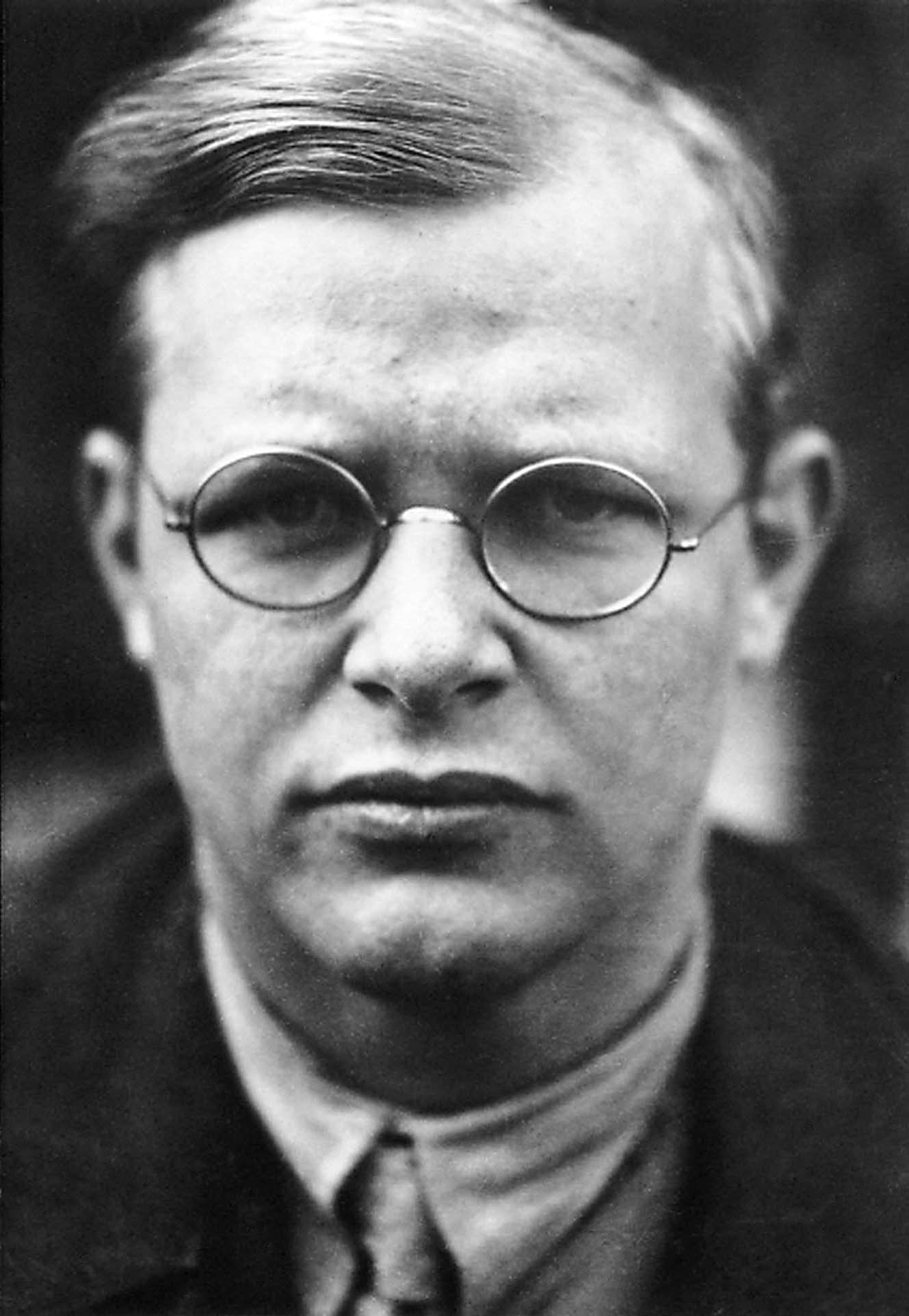
Dietrich Bonhoeffer (1906-1945) is known for his leadership role in the Confessing Church, efforts on behalf of peace and justice, opposition to antisemitism, and writings on theology and ethics that have been influential far beyond his German Lutheran context.
He was was hanged by the Nazis on April 6, 1945 in the Flossenburg concentration camp.