Mar 9, 2015

MORAL MONDAY AND THE FORWARD TOGETHER MOVEMENT IN NORTH CAROLINA

The Wake County Chapter of LPF has actively participated in the Moral Monday and Forward Together Movement which began in North Carolina on April 29, 2013. They have attended the weekly demonstrations and will continue their weekly involvement when the movement resumes in April.  Two members did civil disobedience and were arrested in 2013 and one member was a presenter at one of the events.


The movement was in response to several actions that a newly elected conservative legislative majority was doing to a tradition of caring for the least fortunate. The movement was grounded in a yearning for social justice that enlisted many thousands of people to protest those choices. The protesters were a wide range of citizens, with many religious progressive movements represented. On that first Monday, 17 protesters were arrested. Each Monday, multitudes of protesters gathered at the state legislature building while the general assembly was in session. The protests were characterized by engaging in civil disobedience by entering the state legislature building and then being peacefully arrested. As the movement built momentum, 924 people were arrested in 2013.


The movement encompasses a broad coalition, including advocates for immigrant rights, LGBT rights, criminal justice, worker’s rights, environmental issues and others. They were responding to the conservative faction within the General Assembly who chose to deny emergency unemployment benefits to 170,000 hard-working people; refused to expand Medicaid and give affordable health care to 500,000 North Carolinians; revised the tax code to raise the burden on poor and working class families while easing it for the wealthiest 11 percent and corporations; drastically cut funding from public education; repealed the Racial Justice Act; and passed a voter suppression law that makes it harder for people of color, the elderly and students to cast ballots.


The movement was formed under the leadership of Rev. Dr. William J. Barber, II and the North Carolina NAACP. Rev. Barber often says: “We’re not asking people to go left or right. We’re asking them to go deeper.” North Carolinians suffer as a result of legislative changes he calls extremist, and this suffering should worry everyone, regardless of political party. The movement is about the moral fabric of our entire society. People are advocating for the type of democracy that places the common good at the center of public policy. They demand that we must have a society that articulates the connection between the moral call for justice and the constitutional call for the common good. The movement continues to go FORWARD TOGETHER NOT ONE STEP BACK.

In 2014 people from the movement met with their congressional leaders and they continued to gather weekly while the legislature was in session. On February 8th 80,000 people participated in an annual march called HKonJ (Historic Thousands on Jones Street). It was reported to be the largest Civil Rights protest in the South since the Selma-to-Montgomery marches in 1965. On February 14, 2015 the Moral Monday Movement participated again in the HKonJ Assembly. The movement will begin to gather weekly at the legislative building weekly beginning in April.

The Moral Mondays Movement has spread to Georgia, South Carolina, Florida, and Missouri. Rev. Barber has also gone on to do training across the country in how other organizers can learn lessons from North Carolina's Moral Monday movement, including advising in the civil protests surrounding the police shooting in Ferguson, Missouri.

read more . . . Can Moral Mondays Produce Victorious Tuesdays?

Thanks to Sue Woodling for submitting this article.

Feb 27, 2015

March 8 marks International Women’s Day Inspires Women to “Make It Happen”

Speak up for women’s rights or equality, and you’ll get different reactions depending on who’s listening. It’s par for the course for an activist, isn’t it? We need inspiration, resources, and kindred spirits to sustain and encourage us. International Women’s Day (IWD) March 8 reminds us there’s a global sisterhood and its supporters: to honor women, celebrate women’s achievements, and continue to press for justice and equality.


Women Made the Movement Happen

In 1908 in New York City, 15,000 women marched to demand shorter work hours, better pay and the right to vote.

In 1908 in Great Britain, the Women's Social and Political Union adopted a purple-white-green color scheme to show solidarity with Suffragettes.

In 1910 in Copenhagen, 100 women from 17 countries formed the first International Women’s Day.

In 1915 in Bern, Switzerland, the movement took on the cause of peace. At a demonstration to urge the end of World War I, women on both sides of the conflict took part.

The United Nations has observed IWD on March 8 since 1975. Issues have included rape as a weapon of war, sexual assault, domestic violence, and physical sexual violence.

Women in Action Today
  • Visit the International Women's Day website, a global hub for news, events, and resources. Learn from selected videos. See their “Make It Happen” theme page for action ideas -- including “Paint it purple.”
  • Explore LPF’s Women's Resources, a five-part treasure trove to affirm women and girls’ empowerment.Who in your church would be most interested? How can you support women’s efforts to “make it happen”?
  • Share this blogpost with others. Join in to inspire change, stop violence and nurture peace with women! 
-- Lily R. Wu

(Illustration from IWD 2011 on their 100th anniversary.)

Feb 7, 2015

February 14: Dance with the One Billion Rising Revolution To End Violence Against Women


Here’s a statistic so shocking that it defies belief: 1 in every 3 women in the world will be raped or beaten in her lifetime, according to the One Billion Rising Revolution. Such a staggering issue calls for mighty action. Now here is our opportunity!

Launched on Valentine’s Day 2012, the One Billion Rising movement expanded to 200 countries by 2014. It is evolving in 2015 into the One Billion Rising Revolution: “the biggest mass action in human history to end violence against women.”

  • The call is for systemic change: “overhauling, challenging, and fighting” corrupt systems. 
  • The goal is justice “for all survivors of gender violence and the impunity that protects perpetrators...” 
  • The determination is to “create a new kind of consciousness – one where violence will be resisted until it is unthinkable.”

How can we get started?

And have you seen Lutheran Peace Fellowship’s Women's Peace Resources for inspiration and empowerment? See our action guide "Stopping Violence Against Women and Girls," the “Women's Video Gallery,” and more.

You can help too by passing this blogpost on to your friends. And do share with us what is inspiring you to stop violence against women and girls, and to promote peace instead!
Lily R.Wu and Alan Forsberg


Feb 4, 2015

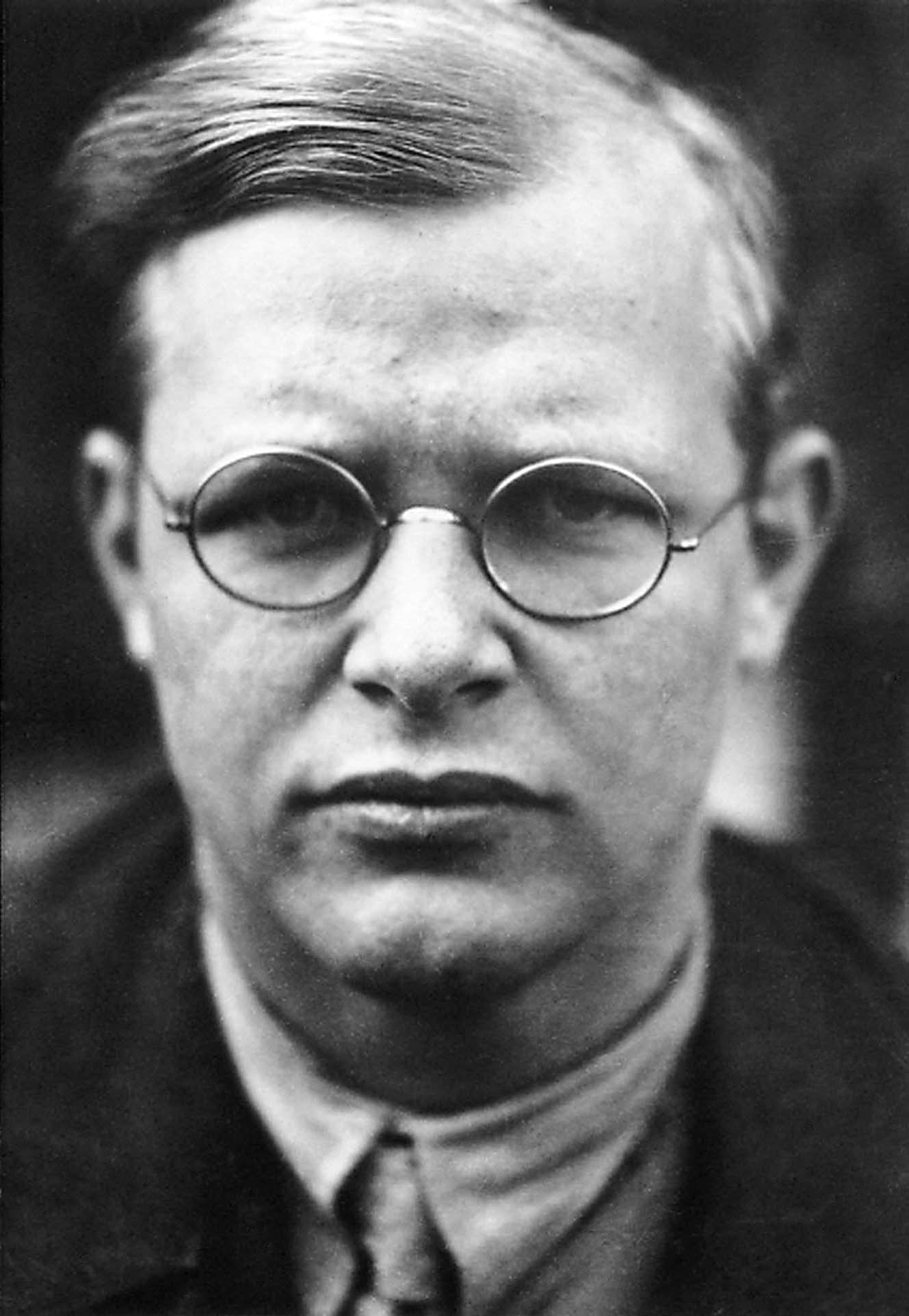
Dietrich Bonhoeffer´s Birthday - February 4

Dietrich Bonhoeffer (1906-1945) is known for his leadership role in the Confessing Church, efforts on behalf of peace and justice, opposition to antisemitism, and writings on theology and ethics that have been influential far beyond his German Lutheran context.
He was was hanged by the Nazis on April 6, 1945 in the Flossenburg concentration camp.


Check out  LPF's resources on this Lutheran Hero at:
Dietrich Bonhoeffer Resources

Jan 17, 2015

Birthday of Martin Luther King, Jr.

"The church must be reminded that it is not the master or the servant of the state, but rather the conscience of the state. It must be the guide and the critic of the state, and never its tool. If the church does not recapture its poetic zeal, it will become an irrelevant social club without moral and spiritual authority. If the church does not participate actively in the struggle for peace and for economic and racial justice, it will forfeit the loyalty of millions and cause people everywhere to say that it has atrophied its will. But if the church will free itself from the shackles of a deadening status quo, and, recovering its great historic mission, will speak and act fearlessly and insistently in terms of justice and peace, it will enkindle the imagination of mankind and fire the souls of men, imbuing them with a glowing and ardent love for truth, justice, and peace. People far and near will know the church as a great fellowship of love that provides light and bread for lonely travellers at midnight."
(From a sermon published under the title ""Why Jesus Called A Wise Man A Fool" and in two books of King's sermons as "A Knock at Midnight" -- in Strength to Love, 1963, and later in a book with the title, A Knock at Midnight.  The sermon appears on page 51 and 61 respectively.  The reference of the final words is King's text, Luke 11:5-6.   An annotated version of King's notes was compiled for the Martin Luther King, Jr. Papers Project, as well as a brief description of its writing and the first time King preached it for the Youth Sunday Services of a Baptist convention in Sept., 1958. It also includes footnotes on many of King's references. Here's the link:
http://mlk-kpp01.stanford.edu/primarydocuments/Vol6/14Sept1958AKnockatMidnight.pdf.
King used all or parts of it in other settings and later expanded it for publication in his book of sermons, Strength to Love as noted above.) Audio excerpts are available at:
http://mlk-kpp01.stanford.edu/kingweb/publications/sermons/multimedia/KAM.htm


From the LPF website:

Martin Luther King's Works -- talks, sermons, letters (including early drafts & mark-ups) etc. The Martin Luther King Jr. Center for Nonviolent Social Change has opened an online digital archive of Dr. King's works.  http://www.mlkonline.net/

Two great articles:

Occupy: Resurrecting Rev. King's Final Dream
by Leo W. Gerard
International President, United Steelworkers

How to Learn Nonviolent Resistance as King Did
by Mary Elizabeth King
also distributed by Common Dreams

Check out the trailer for "Selma" which is getting rave reviews:


One of Dr. King's great speeches:


Jan 1, 2015

Epiphany

Migrants and Refugees

Now when they had departed, behold,( an angel of the Lord appeared to Joseph in a dream and said, "Rise, take the child and his mother, and flee to Egypt, and remain there until I tell you, for Herod is about to search for the child, to destroy him." And he rose and took the child and his mother by night and departed to Egypt and remained there until the death of Herod. (Matthew 2:13-15)

National Migration Week 2015 will be held from January 4-10 with a primary theme of "We are One Family Under God." As a child, Jesus himself experienced migration when he had to seek refuge in Egypt together with Joseph and Mary in order to flee the threats of Herod.

How we treat migrants, refugees, and undocumented people in the USA is a hot topic today. Pressure to migrate due to global economic problems, conflict, and climate change mean this will remain a hot topic. Here are a list of websites and resources for understanding the issue from a Christian perspective:


Lutheran Immigration and Refugee Service
ELCA Message on Migration


Dec 1, 2014

Ferguson, Responding to the Continuing Tragedy

The grand jury has decided to not charge the police officer who shot and killed an unarmed teen in the Ferguson suburb of St. Louis three months ago. The decision and public response reveals a great deal about our broken criminal justice system and skewed media and civic grasp of the incident. A few highlights:

Grand Jury decision: A wide range of critiques are being made of the evidence and the judicial process such as bombarding jurors with mountains of contradictory testimony without any apparent effort to help focus on useful evidence, skewing the results toward dismissing the charges.

Protests: There have been significant numbers of nonviolent protests, largely ignored by the media, in Ferguson and around the country that represent positive responses and hope. The mass media also has seemed incapable of separating nonviolent protest and random violence like looting, and incapable of going beyond that coverage to the real issues of this tragedy such as the four we raised in LPF's blog post on Ferguson, issues that beg for serious attention:

Militarization of police: that separates police from the community and protesters, undercuts legitimate “protect and serve” orientation and programs, and often makes confrontations more lethal;

Racism: such as discriminatory policies in education and jobs, police behavior and incarceration rates; the protests in Ferguson and elsewhere build on decades of marginalization of young people of color and other forms of structural racism;

Skewed budget priorities: that spend money on militarized police and the highest prison rates in the world, instead of addressing the roots of racism;

Stereotypes about nonviolence and inadequate preparation and training in effective protest, especially in a context predisposed to dismiss serious protest and merge it with random violence.

The result has been a minuscule amount of media attention on the important issues like these... attention that might help move the public discussion – and civic action – in productive directions.

It is important that we don’t allow our understandable disappointment, frustration and feelings of powerlessness to get in the way of our thoughtful positive contributions. There are many positive ways we can respond:

- Share helpful information in a thoughtful manner with friends, and in comments on web and media discussions, letters to the editor, etc. (see links in this blog).  You may be surprised at how your sensible comments can stand out!

- Participate in and encourage others to support The Week of Action, Dec. 1-5, including moments of silence, vigils, dialogues, and prayers. It is a call from groups such as Hands Up Coalition, Why We Can't Wait, Code Pink, and The Peace and Justice Studies Association.

- Look for opportunities to encourage addressing underlying issues like militarized police and racism in church adult forums, community discussions, upcoming government deliberations on budgets and priorities, etc.;

- Ferguson should serve as an inspiration for us to suggest forums and workshops on nonviolence. LPF has effective, highly-regarded leaders’ guides and other materials on nonviolence. Connect with the inspiration and resources of the Campaign Nonviolence movement of which LPF is part. (See LPF Nonviolence Resources including a Shalom discussion essay, an AV-rich Nonviolence Forum or our highly regarded Budget Priorities computer-based activity. Contact us about longer trainings.)

- In all this, it makes sense to connect with other people who share your views to support one another’s processing this tragedy and its implications, and taking useful next steps.

Blessings and Peace in this worthy effort!

      Additional links to useful material:

Links on the social and historical context surrounding the events in Ferguson assembled by Sociologists for Justice, 1,600 sociologists against police brutality and racism.

It's not just Ferguson: how the system protects police,” by Chase Madar The Nation magazine, Nov. 24, 2014.

"Will Ferguson be a Moment or a Movement?" by Fredrick Harris, Director of the Center on African American Politics and Society at Columbia University, Washington Post, Aug. 22, 2014.

“The Church and Criminal Justice: Hearing the Cries,” ELCA Social Statement on Criminal  Justice, includes a study guide 


     a couple newer useful links:
"Ferguson Activists Meet With President Obama to Demand an End to Police Brutality Nationwide," FergusonAction website, Dec. 1, 2014

"Obama resists demands to curtail police militarisation calling instead for improved officer training," by Paul LewisThe Guardian, 12-1-14