What if all the religions of the world devoted one day a year to prayers and visible actions to promote the well-being of children? It would make an enormous difference for peace, and send a potent message worldwide.
This international movement is already happening! In 2008, Arigatou International launched the World Day of Prayer and Action for Children. Every November 20, people of faith and secular partners organize a community festival at a house of worship or public place. They follow up with a concrete project that will improve the lives of children in their area. See www.dayofprayerandaction.org for more info.
World Day Convening Chair Kul Gautam gives a video message. He is standing at the UN Assembly Building in New York City, in front of a monument to non-violence donated by Luxembourg.
UNICEF Executive Director Anthony Lake says, "Peace and security are the foundation of a world fit for children. Wars not only kill children, they breed disease and destroy economic hope. And in the end, real peace is not found in a piece of diplomatic paper. It is found in the secure and healthy lives of girls and boys." Mr. Lake played a key part in shaping policies that led to peace in Bosnia-Herzegovina and Northern Ireland, among other hotspots. (From
St Martin of Tours is known as the first conscientious objector and a great peacemaker in the Christian church. His feast day of 11 November (or the nearest Sunday) which is also observed as Remembrance Day for remembering those killed in wars (it was called Armistice Day following the First World War).
Lutherans have had a long history of responding to the gospel call to be peacemakers. One of the initial motivations for the formation of a Lutheran peace movement in the US was the need to support those resisting the draft through conscientious objection to military solutions to conflict. LPF traces its roots to this movement dating back to 1940.
For more contemporary information on current issues relating to the military service, see LPF's resource: Youth and the Military
For further information on St Martin of Tours, here are several links:
Is self-help something that activists are asking for these days? And what kind of peace education are we talking about for teenagers?
The two resources below will give you a wealth of “ah!” and “aha!” moments. There are so many approaches and ideas you can draw from for your own setting.
In the Tiger's Mouth: An Empowerment Guide for Social Action is a classic by Katrina Shields published in 1993. And it’s still the best step-by-step, practical guide I've ever seen for building sustainable organizations, groups, and activist lives. Newer activists will welcome the training to build their inner resources and effectiveness. Seasoned activists will be heartened by the advice on dealing with stress, preventing burnout, coping with bad news, developing accountability, and supporting allies and workmates. I loved the line drawings too, with their sense of humor. This book is a rare gem. And in the spirit of the “simplicity movement,” it reminds us to hone in on essentials.
Learning to Live Together is an intercultural, interfaith program for nurturing values and spirituality for young people 12 to 18 years old. LTLT also helps children to appreciate diversity and respect others. It's been used successfully in over 30 countries, including in conflict-ridden contexts; e.g. in Israel with young Jewish, Christian and Muslim Israelis aged 15-17. A charming 4-minute video explains more at www.ethicseducationforchildren.org. Follow the thread from “What We Do” to “Learning to Live Together” and “LTLT Documents,” to find manuals in various languages that can be viewed or downloaded.
Now when they had departed, behold,( an angel of the Lord appeared to Joseph in a dream and said, "Rise, take the child and his mother, and flee to Egypt, and remain there until I tell you, for Herod is about to search for the child, to destroy him." And he rose and took the child and his mother by night and departed to Egypt and remained there until the death of Herod. (Matthew 2:13-15)
World Refugee Day, observed June 20 each year, is dedicated to raising awareness of the situation of refugees throughout the world.
The Radical History of Mother’s Day www.nationofchange.org
There’s a good number of us who question holidays like Mother’s Day in which you spend more time feeding money into a system that exploits our love for our mothers than actually celebrating them. . . .
Mother's Day: The Radical Roots in the U.S.A. www.allvoices.com
Mother's day in the U.S. was originally associated with two radical women activists Julia Ward Howe and Anna Maria Jarvis. Howe was well known as an abolitionist, suffragist and author . . . .
The Israel-Palestine situation is definitely one of the most challenging and complex in the world today. We asked LPF board member Kathy Adam to step back and reflect a little on her own journey of understanding and action on the issues, and to share some especially helpful links to information -- including several on well-known Lutheran Palestinian pastor Mitri Raheb. Here is Kathy on her experience:
In
1998, my
husband and I went to Israel on a “Footsteps of Jesus”tour. We were awed, walking where Jesus had walked
over 2,000 years ago. Our spirits soared as we followed those
footsteps…. At the same time, more and more questions arose for usabout what was happening all around us.
For example, we
were overwhelmed by the number of soldiers
we encountered everywhere, Israeli Defense
Forces
heavily armed with automatic weapons. We
didn’t yet understand the real scope of the situation in which we
found ourselves. We were in the lands of
Israel and Palestine. The Palestinians –
a people I didn’t even know existed
in the 20th century – were under occupa-tion since 1967 by
the State of Israel. We discovered this
was anything but a peaceful land.
Since 1998 I have
visited the region five times to learn
and observe. Sadly I have witnessed Palestinian homes bulldozed to make way
for Israeli settlements, ancientgroves of olive trees uprooted,
Palestinian farmers and shopkeepers cut
off by walls from their lands and livelihoods. I have talked with people who have had family members, including children, arrested and jailed and even tortured.
But during that first
trip, having only our Sunday School Biblical knowledge to help us place the
contemporary situation into perspective, we
found ourselves lost in our limited understanding. I’m verygrateful that our tour group was able
to meet with Mitri Raheb, pastor of
Christmas Lutheran Churchin
Bethlehem, right up the hill from the Church of the Nativity where it is
said Jesus was born. He
invited our tour group into a room with a circle
of chairs one evening. It was then that the Biblical story and the
contemporary situation started to come together for us.
We learned that for over 2,000 years, there has been a Palestinian presence in the land, and
that for mostof that time, Palestinians – mostly Christian and
Muslim – lived side-by-side with Jews in relative peace.It was a political movement,Zionism,that
from its origins at the end ofthe19th Century has caused the problems that have
become so severe ever since.
In the years since meeting Pastor Raheb, I’ve done all I can to inform myself about the region.
Perhaps you too have read or heard Pastor Raheb, and beeninspiredby this visionaryLutheran advocateof peace
with justice. Itwasno
surprise to me that he
recently received the
prestigious Swedish Olof Palme
Prizeof 2015.
He shares this award with Israeli journalist Gideon Levy, who
campaigns for his country's withdrawal from Palestinian territories. They both received the award foroffering “aglimmerof hopetoaconflictthat fortoo long has plagued and continues to plague millions of people and affects
world peace.”
Afew
years agoIbegan volunteeringwith
“BrightStarsof Bethlehem,”the US organization supporting the ministries led by Pastor Raheb in Palestine. I’m often encouraged by Mitri Raheb’s insight into the challenge of peacemaking: “We’ve been conditioning ourselves to run a
hundred yards, but we are in fact in a marathon,” he says. “Our struggle is neither easy nor short, and wehave
to condition ourselves for the long
challenge ahead. We need moments of joy and hope inthe midst of all this hopelessness.
Otherwise we won’t be able to
continue our journey.”
Indeed, peace does
not come
easily in this part of the
world, as with conflicts in so many other regions of the world.
Nor does peace always come easily in our communities, or even in some of our
close relationships. In our efforts to bring about peace in the
various areas of life, we need moments of joy and hope. We also
need resources to help
us. I
was impressed by the resources
offered by LPF when I first explored them a few years ago.
More recently,
I have been grateful for the
opportunity tocontributeto LPF’s
efforts to share informationabout these issues and struggles. To help frame advocacy options. To help
support this valuable and much-needed service. To offer resources and links through LPF blogs like this one,as
well asposts on the LPF facebook page, program updates,
and the rich variety of material on
LPF’s website…
by Kathy Adams, LPF board member
Here are some especially helpful, informative links on these issues:
Mitri Raheb, Bright Stars, Diyar Ministries
www.brightstarsbethlehem.org - Bright Stars of Bethleham (Christian,
Lutheran, working with all faith traditions in the Middle East.)
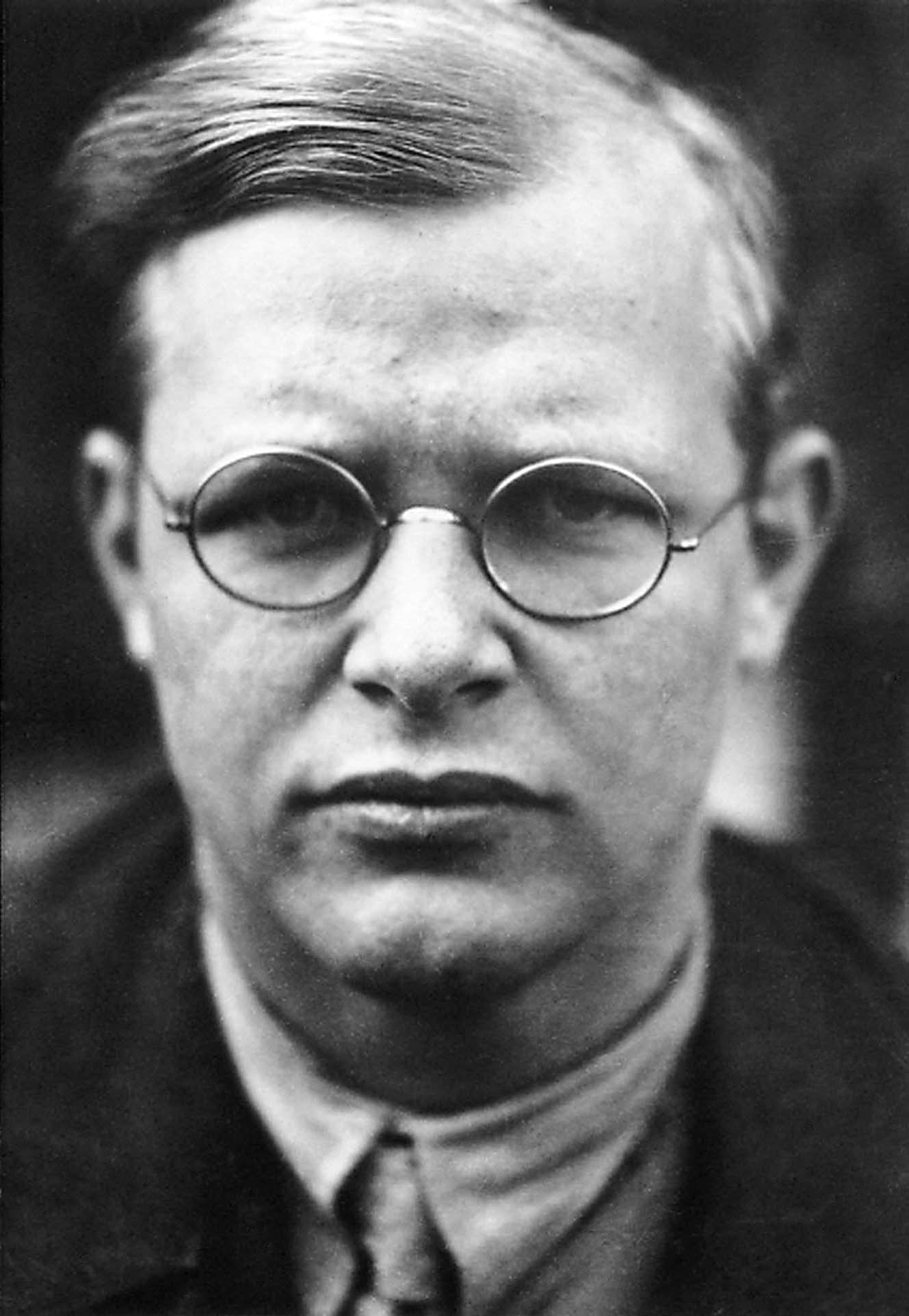
Dietrich Bonhoeffer (1906-1945) is known for his leadership role in the Confessing Church, efforts on behalf of peace and justice, opposition to antisemitism, and writings on theology and ethics that have been influential far beyond his German Lutheran context.
He was was hanged by the Nazis on April 6, 1945 in the Flossenburg concentration camp.
What if all the religions of the world devoted one day a year to prayers and visible actions to promote the well-being of children? It would make an enormous difference for peace, and send a potent message worldwide.
This international movement is already happening! In 2008, Arigatou International launched the World Day of Prayer and Action for Children. Every November 20, people of faith and secular partners organize a community festival at a house of worship or public place. They follow up with a concrete project that will improve the lives of children in their area. See www.dayofprayerandaction.org for more info.
World Day Convening Chair Kul Gautam gives a video message. He is standing at the UN Assembly Building in New York City, in front of a monument to non-violence donated by Luxembourg.
UNICEF Executive Director Anthony Lake says, "Peace and security are the foundation of a world fit for children. Wars not only kill children, they breed disease and destroy economic hope. And in the end, real peace is not found in a piece of diplomatic paper. It is found in the secure and healthy lives of girls and boys." Mr. Lake played a key part in shaping policies that led to peace in Bosnia-Herzegovina and Northern Ireland, among other hotspots. (From
St Martin of Tours is known as the first conscientious objector and a great peacemaker in the Christian church. His feast day of 11 November (or the nearest Sunday) which is also observed as Remembrance Day for remembering those killed in wars (it was called Armistice Day following the First World War).
Lutherans have had a long history of responding to the gospel call to be peacemakers. One of the initial motivations for the formation of a Lutheran peace movement in the US was the need to support those resisting the draft through conscientious objection to military solutions to conflict. LPF traces its roots to this movement dating back to 1940.
For more contemporary information on current issues relating to the military service, see LPF's resource: Youth and the Military
For further information on St Martin of Tours, here are several links:
What do you think could happen if churches everywhere prayed and acted together to nurture lasting peace? . . . among individuals, families, communities and societies? Well, that opportunity is here! And we invite you to join us in this collective effort, now held annually on and around September 21, and this year, emphasizing climate change.
In 2004, the World Council of Churches and the United Nations proposed the idea of an International Day of Prayer for Peace (IDPP) every September 21. Since then, this has become a special day of festive activity in virtually every denomination worldwide. LPF played a special role from the start: LPF leaders wrote the worship resource for the very first IDPP in 2004, used in 10,000 churches across the globe! From early on, we saw the advantages of getting involved in larger efforts like Campaign Nonviolence that both draw in lots of people, and visibly show the potential of the growing LPF/religious peace movement.
Campaign Nonviolence reveals a growing sense that it is time to nurture a broader… longer-term… ecumenical movement… grounded in nonviolence. And we’ve talked a lot about "connecting the dots" -- and bringing together people working on efforts to end war…climate change… violence against women… poverty… racism… and the epidemic of violence (even police violence) in our communities
LPF has ideas and resources to help you and your congregation make the most of this occasion to share in meaningful worship, build understanding and encourage action toward planet nurturing. This year, Sept. 20-27 is: the global week of action around the “Day of Prayer for Peace.” Check out the list of actions happening around the world. Consider organizing one and add it to the list.
A good place to start is to invite your pastor or worship committee to include a prayer in the service on the Sunday before or after Sept. 21. There is a wealth of resources to help.
Another possibility is to invite your social justice committee (or a few members with peace and justice interest) to share advocacy materials during the coffee hour after church. Again there are a variety of options. Here are resources and links on all of the above:
For the connection between climate change and peacemaking, here’s a link to LPF’s blog on the subject.
Campaign Nonviolence members are planning actions that connect reversing climate change with ending war and poverty. Actions are planned across the country during the week of Sept. 20-27 … and that's just the start!”
Lutheran advocacy possibilities: We can start with the ELCA's climate change conversation and urge Lutheran institutions to do what other denominations have done, divest from industries responsible for greenhouse gas emissions tied to global warming. We could also call on our leaders to follow the example of these Swedish Lutheran Archbishops, including their first female archbishop.
We’d be happy to hear from you to discuss this further. And we’d love to hear your ideas and suggestions. This has considerable potential and offers many opportunities. Let’s make the most of it!
Now when they had departed, behold,( an angel of the Lord appeared to Joseph in a dream and said, "Rise, take the child and his mother, and flee to Egypt, and remain there until I tell you, for Herod is about to search for the child, to destroy him." And he rose and took the child and his mother by night and departed to Egypt and remained there until the death of Herod. (Matthew 2:13-15)
World Refugee Day, observed June 20 each year, is dedicated to raising awareness of the situation of refugees throughout the world.
The Radical History of Mother’s Day www.nationofchange.org
There’s a good number of us who question holidays like Mother’s Day in which you spend more time feeding money into a system that exploits our love for our mothers than actually celebrating them. . . .
Mother's Day: The Radical Roots in the U.S.A. www.allvoices.com
Mother's day in the U.S. was originally associated with two radical women activists Julia Ward Howe and Anna Maria Jarvis. Howe was well known as an abolitionist, suffragist and author . . . .
Dietrich Bonhoeffer (1906-1945) is known for his leadership role in the Confessing Church, efforts on behalf of peace and justice, opposition to antisemitism, and writings on theology and ethics that have been influential far beyond his German Lutheran context.
He was was hanged by the Nazis on April 6, 1945 in the Flossenburg concentration camp.
The grand jury has decided to not charge the police officer who shot and killed an unarmed teen in the Ferguson suburb of St. Louis three months ago. The decision and public response reveals a great deal about our broken criminal justice system and skewed media and civic grasp of the incident. A few highlights:
Grand Jury decision: A wide range of critiques are being made of the evidence and the judicial process such as bombarding jurors with mountains of contradictory testimony without any apparent effort to help focus on useful evidence, skewing the results toward dismissing the charges.
Protests: There have been significant numbers of nonviolent protests, largely ignored by the media, in Ferguson and around the country that represent positive responses and hope. The mass media also has seemed incapable of separating nonviolent protest and random violence like looting, and incapable of going beyond that coverage to the real issues of this tragedy such as the four we raised in LPF's blog post on Ferguson, issues that beg for serious attention:
Militarization of police: that separates police from the community and protesters, undercuts legitimate “protect and serve” orientation and programs, and often makes confrontations more lethal;
Racism: such as discriminatory policies in education and jobs, police behavior and incarceration rates; the protests in Ferguson and elsewhere build on decades of marginalization of young people of color and other forms of structural racism;
Skewed budget priorities: that spend money on militarized police and the highest prison rates in the world, instead of addressing the roots of racism;
Stereotypes about nonviolence and inadequate preparation and training in effective protest, especially in a context predisposed to dismiss serious protest and merge it with random violence.
The result has been a minuscule amount of media attention on the important issues like these... attention that might help move the public discussion – and civic action – in productive directions.
It is important that we don’t allow our understandable disappointment, frustration and feelings of powerlessness to get in the way of our thoughtful positive contributions. There are many positive ways we can respond:
- Share helpful information in a thoughtful manner with friends, and in comments on web and media discussions, letters to the editor, etc. (see links in this blog). You may be surprised at how your sensible comments can stand out!
- Participate in and encourage others to support The
Week of Action, Dec. 1-5, including moments of silence, vigils, dialogues, and prayers. It is a call from groups such as Hands Up Coalition, Why We Can't Wait, Code Pink, and The Peace and Justice Studies Association.
- Look for opportunities to encourage addressing underlying issues like militarized police and racism in church adult forums, community discussions, upcoming government deliberations on budgets and priorities, etc.;
- Ferguson should serve as an inspiration for us to suggest forums and workshops on nonviolence. LPF has effective, highly-regarded leaders’ guides and other materials on nonviolence. Connect with the inspiration and resources of the Campaign Nonviolence movement of which LPF is part. (See LPF Nonviolence Resourcesincluding a Shalom discussion essay, an AV-rich Nonviolence Forum or our highly regarded Budget Priorities computer-based activity. Contact us about longer trainings.)
- In all this, it makes sense to connect with other people who share your views to support one another’s processing this tragedy and its implications, and taking useful next steps.
Blessings and Peace in this worthy effort!
Additional links to useful material:
Links on the social and historical context surrounding the events in Ferguson assembled by Sociologists for Justice, 1,600 sociologists against police brutality and racism.
“It's not just Ferguson: how the system protects police,” by Chase Madar The Nation magazine, Nov. 24, 2014.
"Will Ferguson be a Moment or a Movement?" by Fredrick Harris, Director of the Center on African American Politics and Society at Columbia University, Washington Post, Aug. 22, 2014.
What if all the religions of the world devoted one day a year to prayers and visible actions to promote the well-being of children? It would make an enormous difference for peace, and send a potent message worldwide.
This international movement is already happening! In 2008, Arigatou International launched the World Day of Prayer and Action for Children. Every November 20, people of faith and secular partners organize a community festival at a house of worship or public place. They follow up with a concrete project that will improve the lives of children in their area.
In 2009, more than 9,000 people in 22 countries took part. In 2010, more than 36,500 people joined in from 48 countries! Stopping violence against children was the World Day's campaign for 2011-2013. A guide to positive parenting and non-violent discipline will soon be released. See www.dayofprayerandaction.org for more info.
World Day Convening Chair Kul Gautam gives a video message. He is standing at the UN Assembly Building in New York City, in front of a monument to non-violence donated by Luxembourg.
UNICEF Executive Director Anthony Lake says, "Peace and security are the foundation of a world fit for children. Wars not only kill children, they breed disease and destroy economic hope. And in the end, real peace is not found in a piece of diplomatic paper. It is found in the secure and healthy lives of girls and boys." Mr. Lake played a key part in shaping policies that led to peace in Bosnia-Herzegovina and Northern Ireland, among other hotspots. (From
What do you think could happen if churches everywhere prayed and acted together to nurture lasting peace? . . . among individuals, families, communities and societies? Well, that opportunity is here! And we invite you to join us in this collective effort, now held annually on and around September 21, and this year, emphasizing climate change.
In 2004, the World Council of Churches and the United Nations proposed the idea of an International Day of Prayer for Peace (IDPP) every September 21. Since then, this has become a special day of festive activity in virtually every denomination worldwide. LPF played a special role from the start: LPF leaders wrote the worship resource for the very first IDPP in 2004, used in 10,000 churches across the globe!
LPF has ideas and resources to help you and your congregation make the most of this occasion to share in meaningful worship, build understanding and encourage action toward planet nurturing. This year, Sept. 21 is:
The global “Day of Prayer for Peace” plus “The Largest Climate March in History," and Nonviolent Actions in over 130 communities that connect reversing climate change with ending war and poverty.
The coming together of these efforts offers a significant opportunity to educate and encourage congregation members, and to energize and strengthen efforts on the crucial issues of climate change and peace.
A good place to start is to invite your pastor or worship committee to include a prayer in the service on the Sunday before or after Sept. 21. There is a wealth of resources to help.
Another possibility is to invite your social justice committee (or a few members with peace and justice interest) to share advocacy materials during the coffee hour after church. Again there are a variety of options. Here are resources and links on all of the above:
The People's Climate March (billed as the "Largest Climate March in History"): they offer posters and other resources and a long list of supportive groups. For the connection between climate change and peacemaking, here’s a link to LPF’s blog on the subject.
Campaign Nonviolence members are planning actions that connect reversing climate change with ending war and poverty. “Over 110 nonviolent actions are planned across the country during the week of Sept. 21-27 … and that's just the start!”
Lutheran advocacy possibilities: We can start with the ELCA's climate change conversation and urge Lutheran institutions to do what other denominations have done, divest from industries responsible for greenhouse gas emissions tied to global warming. We could also call on our leaders to follow the example of these Swedish Lutheran Archbishops, including their first female archbishop.
We’d be happy to hear from you to discuss this further. And we’d love to hear your ideas and suggestions. This has considerable potential and offers many opportunities. Let’s make the most of it!
Now when they had departed, behold,( an angel of the Lord appeared to Joseph in a dream and said, "Rise, take the child and his mother, and flee to Egypt, and remain there until I tell you, for Herod is about to search for the child, to destroy him." And he rose and took the child and his mother by night and departed to Egypt and remained there until the death of Herod. (Matthew 2:13-15)
World Refugee Day, observed June 20 each year, is dedicated to raising awareness of the situation of refugees throughout the world.